
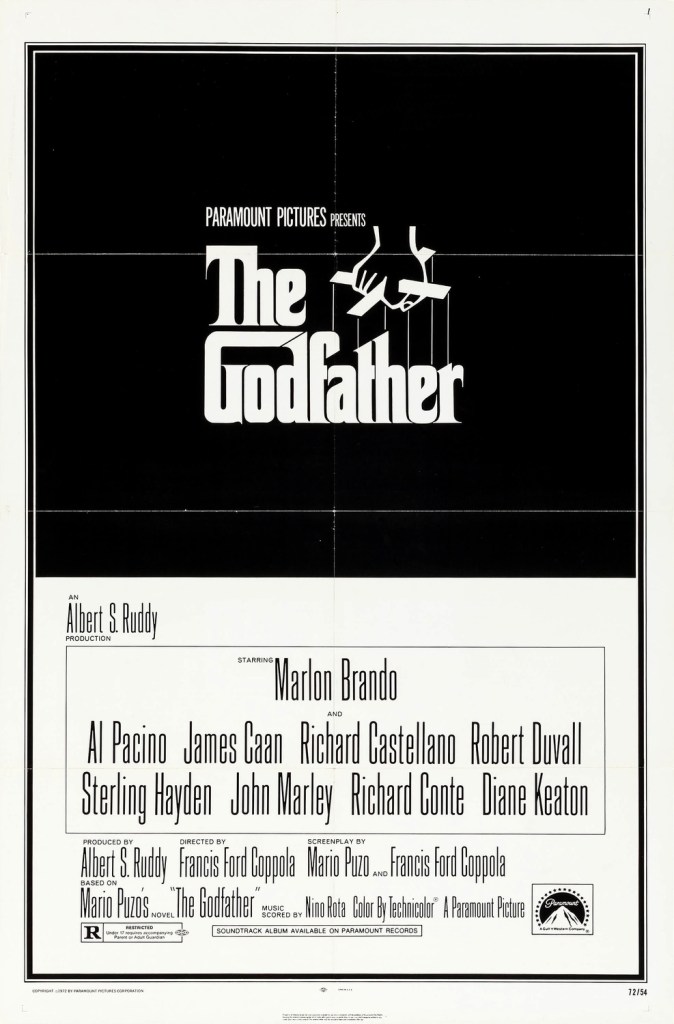

Once the iconic, haunting strains of Carlo Savina’s The Godfather Waltz kicks in, it soon becomes obvious that there isn’t much more left to say about Francis Ford Coppola’s game changing epic that hasn’t already been said – aside from Peter Griffin complaining that it’s a movie that insists upon itself. Essentially the Godfather of all modern crime films, it’s impact upon the genre, and indeed upon cinema itself, is just as seismic as the one Star Wars had on sci-fi, or what The Exorcist did for horror as it rewrote the established order as it went along.
Taking Mario Puzo’s source novel and cracking the lid on a fictional family in the Italian Mafia, Coppola dunked us into a world of crime that we’d never seen before, a world of murder and plotting, sure; but it was also a world of family connections and honor where certain morals are put aside when “business” rears it’s inevitable head.
The greatest crime movie ever made? While my personal preferences lean slightly more to the razzmatazz of Martin Scorsese’s Goodfellas, a welcome rewatch reminds us that it’s never wise to take sides against the family…
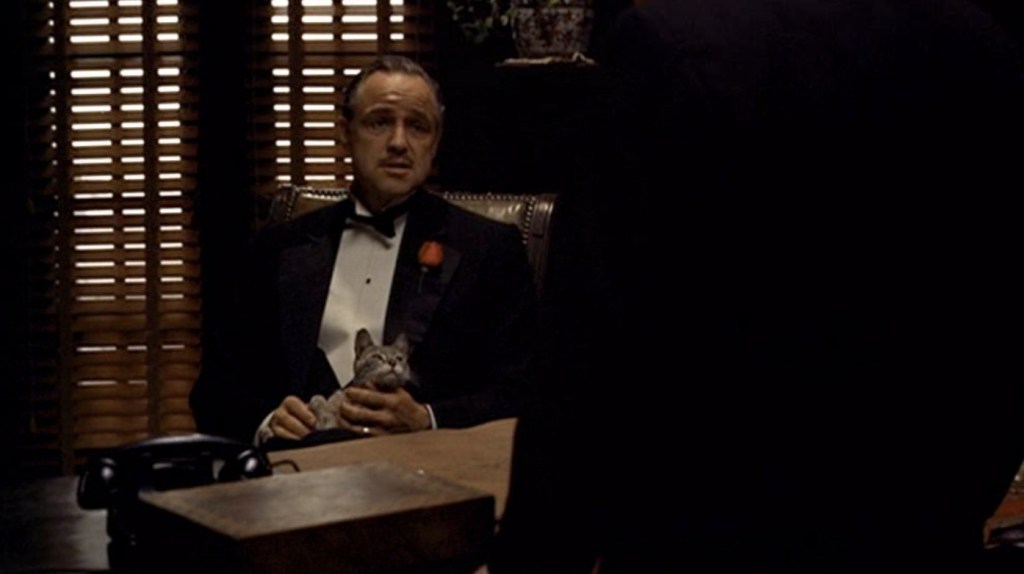
Michael Corleone is not only a World War II veteran who has recently returned from the war, but he’s also the youngest son of Don Vito Corleone, the head of the Corleone Mafia Family and “godfather” of the Five Families. While Michael’s military duties has managed to keep him out of the family business, short-tempered eldest brother “Sonny”, and sweaty fuck-up Fredo are neck deep in it alongside adopted brother and family consigliere, Tom Hagen. We gain entrance to the Corleone family on the day of Vito’s daughter’s wedding and as Michael shows his new girlfriend, Jay, around, Vito is taking various, underworld related requests upstairs.
But once the wedding is over and we’ve made our introductions, it’s time to get down to business and ripples of dissent radiate out when Vito defiantly puts the kibosh on the Corleones moving into the burgeoning drug trade. From here, his standing among the Five Familes suddenly starts to look a little shaky as unseen forces start to move against him and soon drug baron, Virgil Sollozzo, and the Tattaglia family start taking pieces off the board before trying to off Vito himself, shooting him on the street.
Vito survives, but as he heals, it’s down to his sons to keep the family’s heads above water and while Tom does his best as a wartime consigliere, the hotheaded Sonny just can’t seem to get the job done. This means that despite years of avoiding working in the family, Michael starts finding himself repeatedly placed in situations that not only require him to protect his father, but personally strike out at those that mean the Corleone family harm. But as Michael’s influence steadily grows, can he still cling onto his soul as his humanity is steadily forced to erode?
While some might take my earlier mention of Goodfellas to be a slight against the Corleone Family and everything they represent, not even my love of Scorsese’s flashy extravaganza can stop me from kissing the ring and showing upmost respect to Coppola’s undisputed masterpiece. Even if The Godfather wasn’t a perfect movie (which it is), you cannot fail to recognise the influence it had on virtually every other crime film ever made. Goodfellas, Scarface, Heat, Menace II Society, virtually every movie that deals on the wrong side of the law and details the day to day existence of a sprawling cast owes something to the exploits of the Corleone family and that’s because if you were to take out all the chilling hits and decapitated stallions, you’d still have a gripping family drama that pulses with detail and authenticity.
We’re not introduced to the Corleones while they plot a heist or do other crime related chicanery, we meet them during the marriage of daughter Connie and despite the dancing and joyful chaos of an Italian wedding, we get a strong read on each member of the family even though their guard is down. John Cazale’s rubber spined Fredo and James Caan’s bullheaded Sonny are easy to figure out, while Robert Duvall’s level-headed consigliere bends over backwards to smooth the road, but it’s both Al Pacino’s Michael and Marlon Brando’s Vito that unsurprisingly hold your fascination the most. Brando (only 47 at the time) instantly launched a billion bad impersonators overnight as the seemingly benevolent Vito, offering out favours from beneath stunning, jowly, old age makeup and attempting to try and keep his dishonest business as honest as possible.
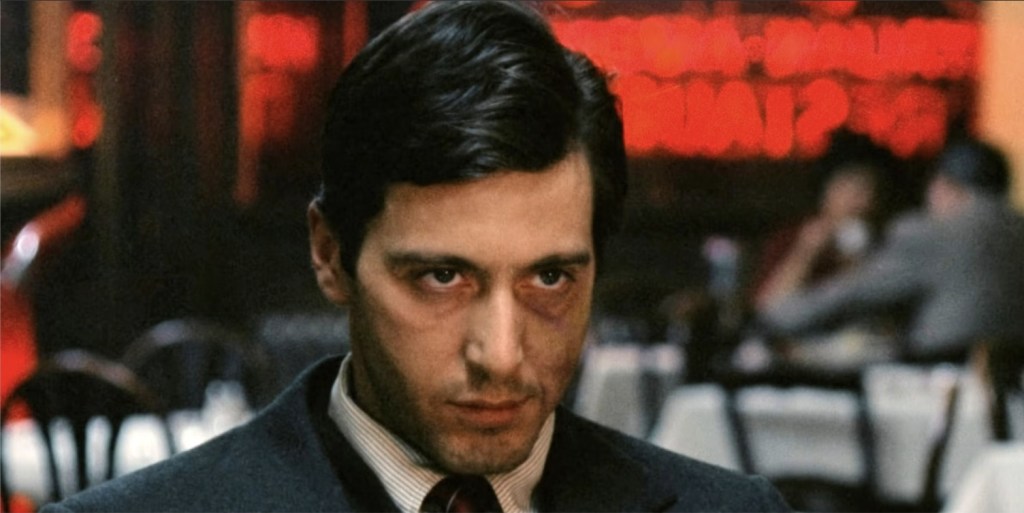
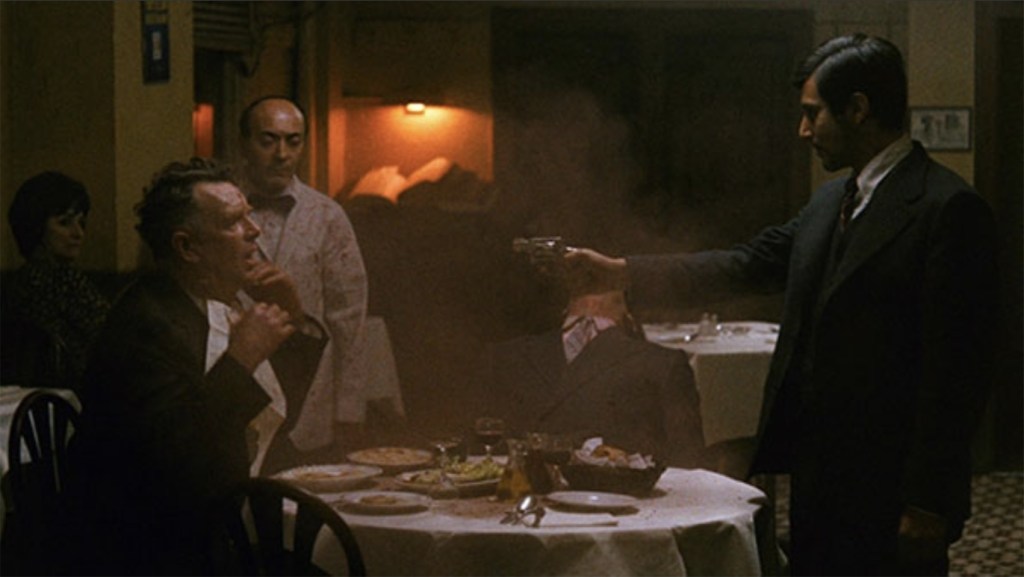
However the real meat of the piece belong with Pacino’s seemingly virtuous Michael and his steady transformation from wide-eyed innocent to glacier hearted monster being nothing short of breathtaking. We follow him, step for step as the Mafia life creeps into his psyche and forces him down an ever darkening path, from his shocking murder of the men responsible for his father’s shooting, to his idyllic – yet doomed – retreat to Sicily, Pacino delivers a masterclass in understated emotion, not falling back on some of the verbose traits he would go on to be notorious for.
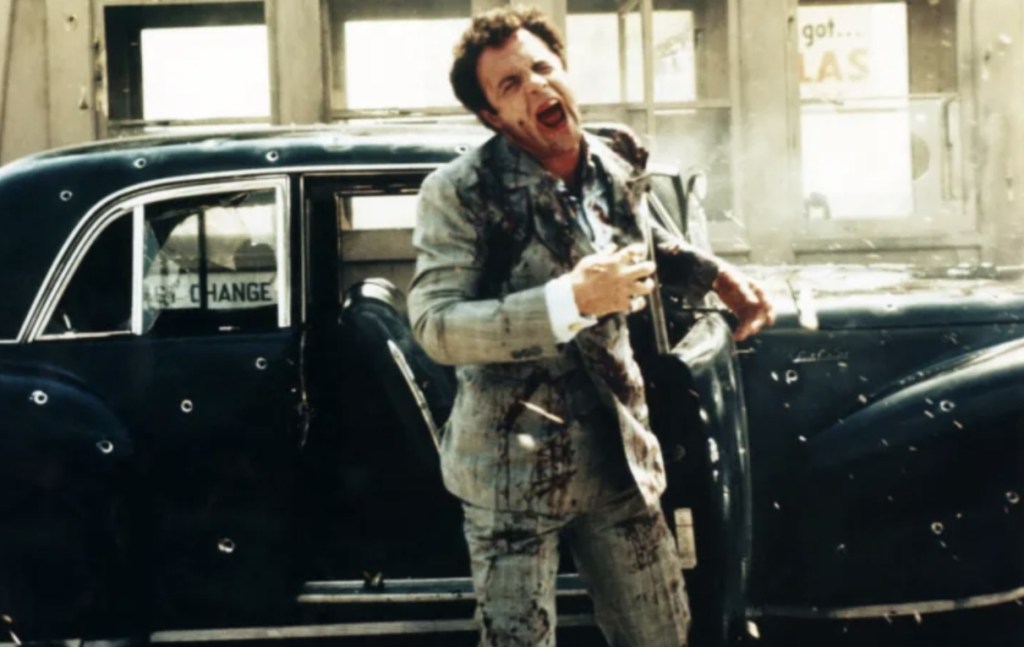
However, what really sticks with you is the quiet. Utterly in control of this world he’s creating, Coppola guides us into a world that’s unnervingly civil, where death sentences can be offered out with a pat on the back or a robust pat on the cheek. In fact, The Godfather contains a whole collection of hideous ends for people that not only shock due to the reserved tone, each of the deaths end up being as iconic as anything else found in the film. Be it the traumatic end of hulking enforcer, Luca Brasi, Sonny discovering that his temper is no match for a line of Thomson submachine guns, or the breathtaking climactic slaughter that occurs while Michael attends his nephew’s baptism, Coppola never lets us stray too far from the fact that this is a family who have no compunction on delivering a death warrant for those who cross them.
One of the many 70s releases that instantly altered the face of cinema forever (christ, it seemed like there was an unmitigated game changer every other week back in those days), The Godfather may have gotten a bit of a reputation of late for being a “Dad’s film”, but when it comes to meticulous world building, flawless performances and a perfectly balanced tone, any viewing of The Godfather should be an offer you can’t refuse.
One of the biggest of the big daddies of 70s mold breaking cinema, Francis Ford Coppola’s pitch perfect epic is dignified and calm right up to the moments when it isn’t, thanks to the nuanced study of people who can happily balance family drama with the brutal execution of an enemy. Magnetic, terrifying, fascinating, brutal; just know that when things get really nasty, it’s only just business – and if any film knows how to do the business, it’s The Godfather.
🌟🌟🌟🌟🌟

 We Have Issues