
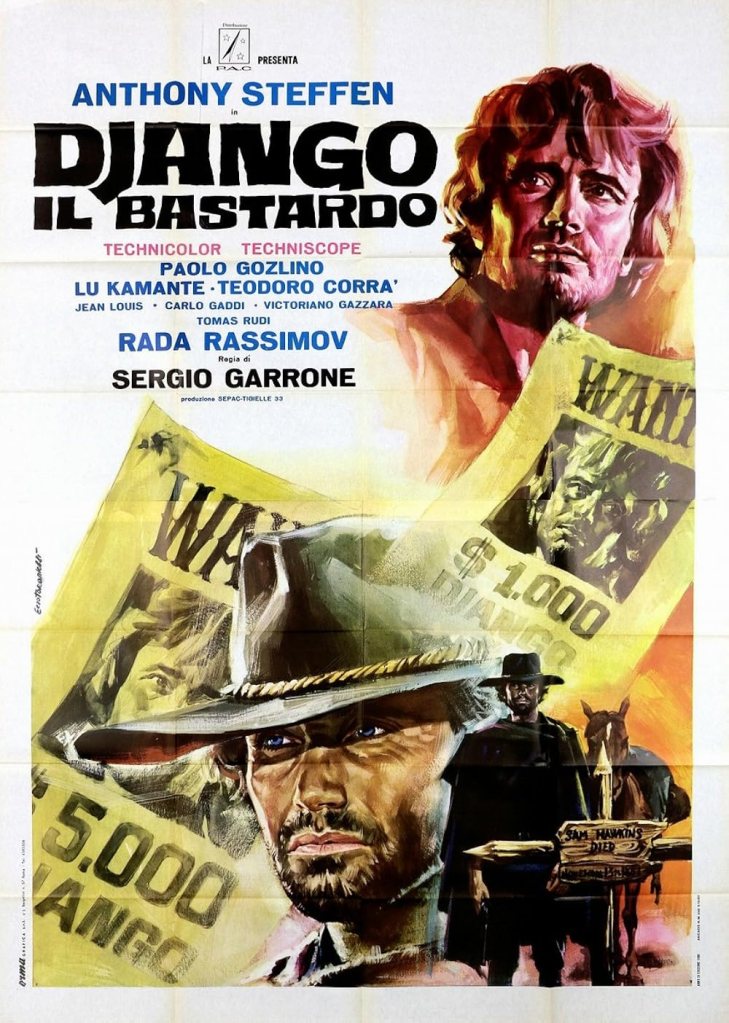
Guess what, cowpokes? It’s time to delve back into the weird, wonderful and wildly out of control world of the unofficial Django spin off that exploded into the realms of Italian cinema after the release of Sergio Corbucci’s original, 1966 movie. There are, believe it or not, certain rules (not legal ones, of course) to crafting a Django knock off and a biggie is that the best ones usually stick to including a strange, almost gothic horror tone to proceedings that apes the stand out atmosphere and ambience of the original. Well, if it’s gothic/horror undertones you’ve come to see, 1969s Django The Bastard has got you covered as it spins a premise curiously reminiscent of Clint Eastwood’s masterpiece, High Plains Drifter, that suggests that our hero may not actually be of flesh and blood and instead may be a manifestation of pure vengeance from beyond the grave. However, while the movie – like virtually all the others that casually stuck the name “Django” in the title – isn’t an official sequel, it does have the benefit of featuring the man who probably played the steely gunslinger himself the most times in his copyright optional career…
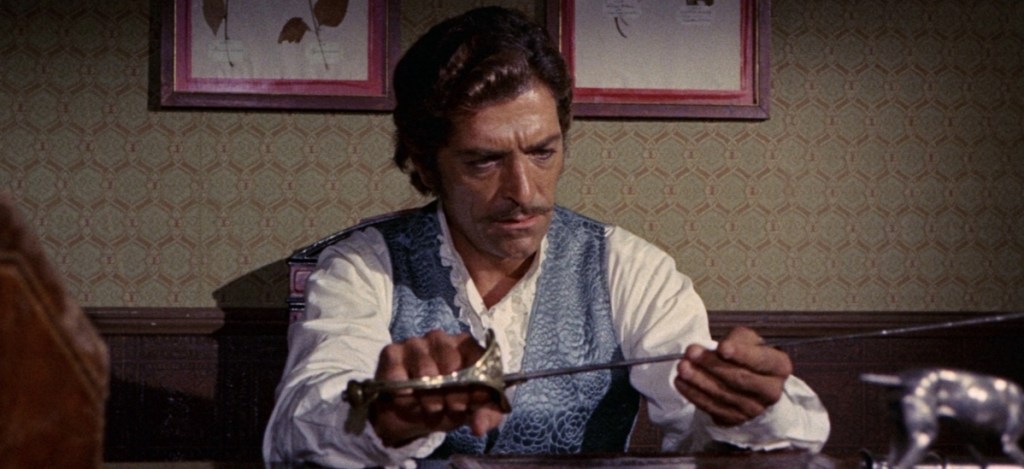
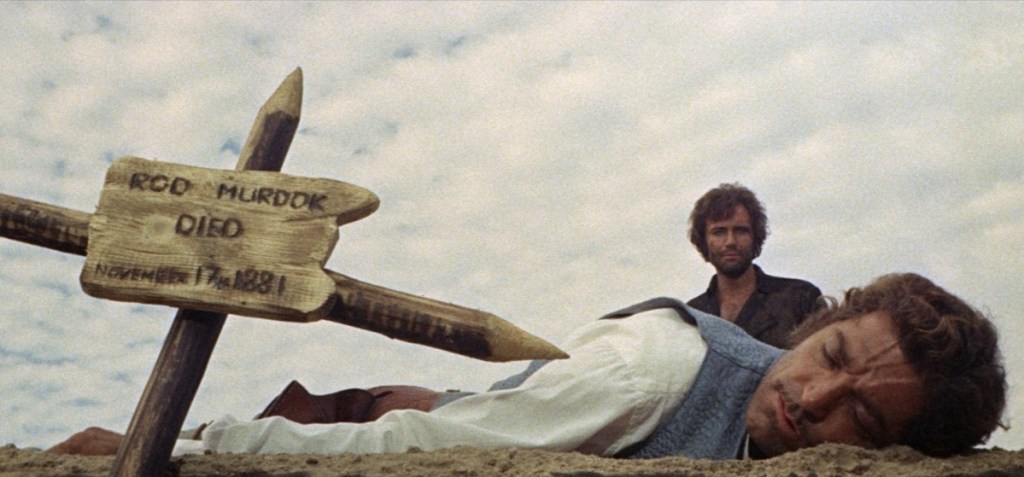
Desert City is a town like many others in the world of the Spaghetti Western. It’s corrupt, it’s denizens live in fear and the place is ruled with an iron fist by the ruthless and richest man in the territory Rod Murdock who is flanked by his near uncontrollable, mad dog brother, Luke. However, unbeknownst to these two villains, a reckoning is heading their way as a shadow man by the name of Django is shooting men down in cold blood and leaving crosses near their bodies that feature the victim’s name plus the date they were killed. It seems that this Django dude has a legitimate axe to grind as years earlier, back during his days in the Confederate Army, he was betrayed by three of his own officers and shot down while his unit was ambushed and subsequently murdered.
If you’ve never seen a Spaghetti Western before, please allow me to join the dots for you as the man responsible for that act of betrayal was (wait for it) Rod Murdock and over a decade later, Django has a cross with his name on it.
Armed with a bunch of supernatural abilities such as the ability to vanish like Batman, cloud men’s minds like The Shadow and fire eight bullets from a six-shooter gun (although, to be fair, that last one might just be an editing snafu), it seems that Django’s vengeance is merely a formality. But to underestimate the cadre of killers that Rod has working for him (not to mention a psycho-brother who’s kaka for cocopuffs), it just might take more than just some spooky powers to net the outcome that Django’s shooting for. So it’s a case of the immovable object meeting the irresistible force and only one is going to walk out of Desert Town with their heart still beating – assuming, that is, that Django’s alive to begin with.
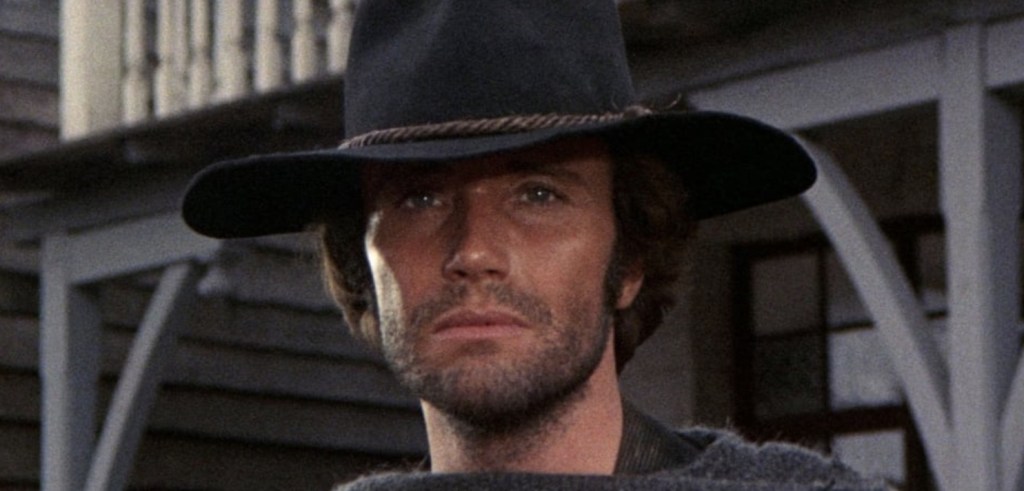
While I constantly make the fact that 95% of all Django movies are blatant rip offs sound vaguely comical (only two of the fuckers are actually official entries) it isn’t to say that any of the also-rans cant manage a sense of high quality, so it’s my duty to report that Django The Bastard is definitely one of the better and more stylish entries in this non-franchise that stubbornly refused to die. The most notable thing about Django The Bastard, other than that utterly bitchin’ title (it’s not like other Spaghetti heroes followed suit with the likes of Sabata The Utter Prick or Sartana The Complete Twat, did they?), is that it wasn’t the first time Anthony Steffen had played the titular character and it wasn’t the last either. In fact, it’s a testament to how mental the Italian film industry is that Steffen played Django more times than the official Django did, but the actor has all the correct requirements to do a noticeable job such as an unwavering, piercing gaze, stubble you could scrape paint with and an unchanging expression so inscrutable he’d beat a statue in a staring contest.
However, where Django The Bastard really seals the deal is how far it takes the moody, morbid imagery the series was famous for running and running with it to make its lead a possible ghost. The opening scenes that sees Django take out some of his lesser targets go so hard on the gothic ambience, it almost feels like the type of eccentric horror movies that Lucio Fulci rattled out in the 70s and 80s as these formally tough guys are reduced to quivering wrecks at the sight of their names adorning a cross before Django puts them out of his misery.
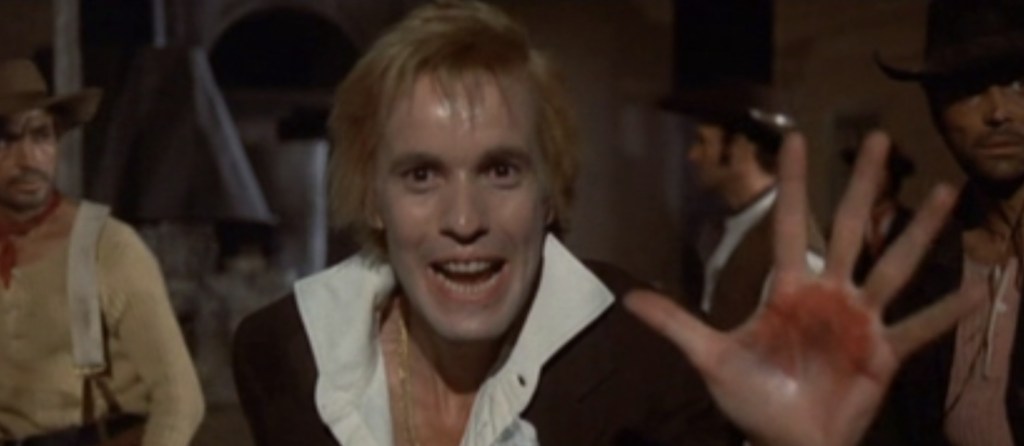
However, while the first 30 minutes is practically just Django shooting people while barely pulling a single facial expression, it’s weirdly far most engrossing than when the actual plot kicks in and the machinations of the Murdock kicks in to replace the almost slasher movie-like beginning. On the plus side, at least the villains are fairly interesting. Paolo Gozlino’s Rod is a fairly standard villain who has ensnared an entire town for his own selfish ends, but his maniacal brother, played by Luciano Rossi, is a far more out-there brand of wrong-un and therefore far more in line with the Django aesthetic. When the pasty faced lunatic (who looks vaguely like an albino Robert Patterson) isn’t freaking out in a kill crazy rampage that can only be calmed by an ether soaked rag of the comely charms of Rada Rassimov’s opportunistic bench, he’s randomly shooting people on the street and screaming things like “Justice is dead!”. He proves to be worthy test for the supposed supernatural skills of Django, even opting to try and hang our hero in order to see just how dead he really is and as a result, the final third snaps back into life.
By Spaghetti Western standards, director Sergio Garrone keeps things appropriately stylish, staging some good deaths and typically frenetic shootouts while framing his hero in a typically iconic light, but it’s pretty impossible to ignore the fact that Django The Bastard bears more than a passing resemblance to High Plains Drifter. Of course, Eastwood’s harsh masterpiece is infinitely superior and plays the whole is-he-or-isn’t-dead thing in a far more ambiguous, but in a pulp, gunslinging sort of way, Django The Bastard obviously having fun with pushing the morbid aspects of the plot.
While it’s not best Django movie ever made (I’d expect Sergio Corbucci and Quentin Tarrantino might have something to say about that) it certainly isn’t the worst and lovers of the Italian end of the Western will be well served by the overly complex plans of this version of the death obsessed anti-hero.
Lean, gritty and full of Spaghetti shenanigans, this particular instance of Django variant goes a fair way to show that vengeance is indeed something of a bastard.
🌟🌟🌟🌟

 We Have Issues