

When Into the Spider-Verse landed in cinemas, obviously while pulling a classic Spidey, superhero landing pose when he did so, few could have imagined the effect of would have on the cultural landscape of animation as we knew it. Utilizing a pop art, hugely stylized look that utilized a dizzying array of animation techniques, frames rated and quick-fire visual gimmicks that took a highly developed spider-sense to absorb all of its genius in a single sitting, there had been literally nothing so groundbreaking in a wide-release, feature length “cartoon” since we first were introduced to Woody and Buzz back in 1995. The fact that all this CGI razzamatazz was all employed in service to the characters, plot and jokes without a single scene being wasted was only the cherry on the cake which saw our friendly neighbourhood Spider-Man take on – and beat – animation giants such as Disney, Pixar and DreamWorks at their own game. Do you have any idea how many creative cylinders you have to be firing on to make Pixar look dated?
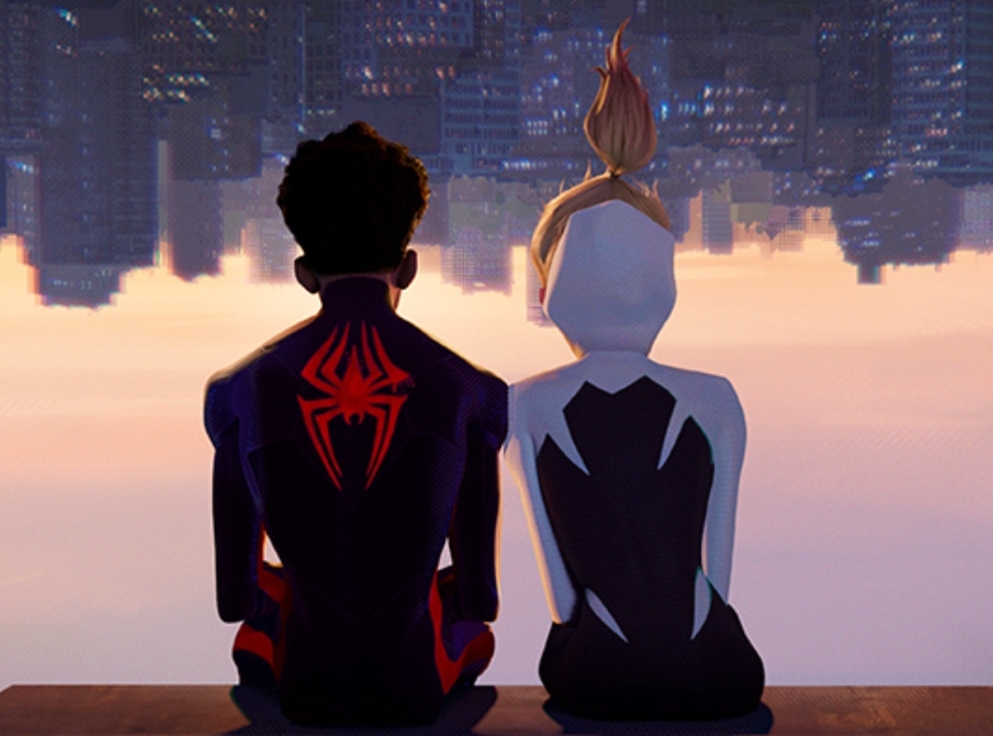
After the multiversal events of Into The Spider-Verse, we catch up with both Miles Morales and Gwen Stacy, the Spider-People from Earth-1610 and Earth-65 respectively, as they settle in to their lives fighting crime in their separate dimensions. However, both are experiencing troubles in their lives with the knowledge that there are other Spider-Men out there leaving Miles feeking restless and lonely which in turn is causing him to act out and alienate his well-meaning parents. On the other hand, Geen is experiencing major friction with her Police Captain father who mistakenly believes that her wall crawling alter-ego is responsible for murder, but when she’s forced to tangle with a version of The Vulture obviously not from her universe, she flees from the mounting familial tension by joining a multiversal trouble shooting team led by the intensely serious Miguel O’Hara, the Spider-Man of 2099.
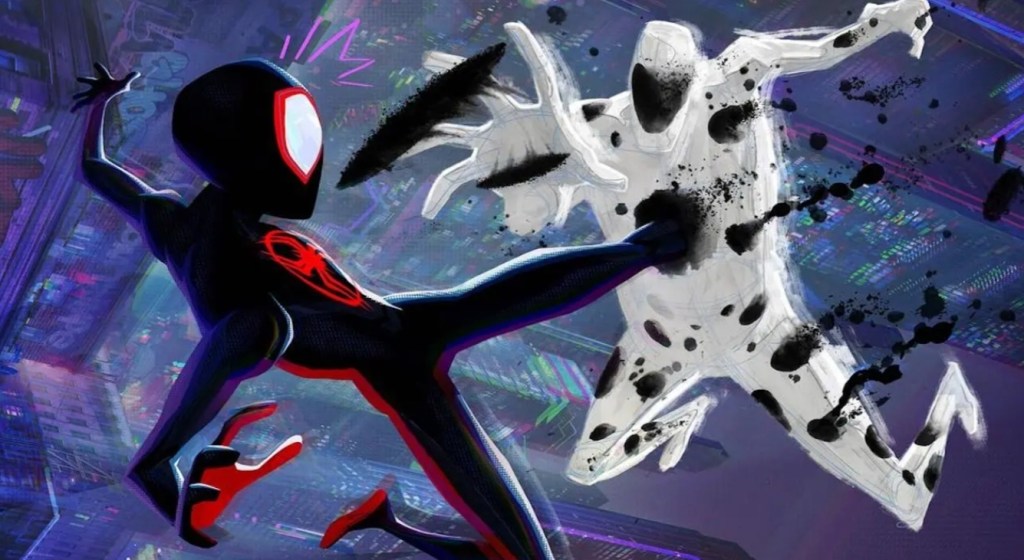
Back on Earth 1610, Miles’ pining for Gwen takes a well deserved rest when he’s forced to tangle with a gangly, z-list, super villain named the Spot who uses the dark blotches on his creepily white body to create portals to commit petty crimes. However, after clumsily tustling, Spot becomes unhealthily obsessed with Miles, believing this Spider-Man is his one, true nemesis and starts looking for ways to amplify his already freaky abilities to become more of a threat.
Re-enter Gwen, who is sent back to Earth-1610, not to meet up with Miles, but to keep an eye on the portal-flinging looney that’s becoming more of a threat by the minute – however, she just can’t help herself and their long overdue union causes distaste to strike that sees them flung across the multiverse to strange new words. However, O’Hara isn’t too pleased that Miles has gone from spider, to fly in the ointment and realises that his well-meaning attempts to help could eventually destroy the very multiverse he and countless Spider-Beings of all shapes and sizes have been slaving to protect.
There probably hasn’t been another sequel released over the past couple of years that has such a tough act to follow than Across The Spider-Verse, primarily because Into The Spider-Verse is a practically perfect slice of cinema. Merging stunning pop art visuals and cramming in 60 years worth of Spider-Man in-jokes that somehow didn’t pull you away from the drama, never before has a movie immersed you so totally in a comic book world. However, not only did it pull all this off, it also drove home the “anyone can be Spider-Man” motif thanks to the uncontrollably endearing, big screen introduction of Morales, a child of African American and Puerto Rican heritage and an alternate Gwen Stacy, who gained spider powers instead of being murdered for being Spider-Man’s main squeeze – simply put, crafting a worthy sequel would be next to impossible.
Only… it wasn’t, as Spider-Movie purists will no doubt be grumbling that now they have another movie strongly vying for its rightful place as best Spider-Man movie of all time. Essentially playing the hugely dealt “Empire Strikes Back” card, ATS-V introduces new characters, new worlds and greatly expands an already sizable canvass that includes all the stuff you loved about ITS-V, but more. So much more.
Leap-frogging the multiverse like an overzealous web-slinger vaults over skyscrapers, the filmmakers give us whole new worlds for our eager eyes to drink in that match whichever Spider-Man is saving the day. Look upon Earth-65 and audibly gasp as Spider-Gwen’s dimension is rendered in bewitching watercolours that subtly shift depending on her mood, gaze upon the vibrant, Indian themed Earth-50101 that’s the stomping ground for Pavitr Prabhakar or the slick future world of Miguel O’Hara’s Earth-
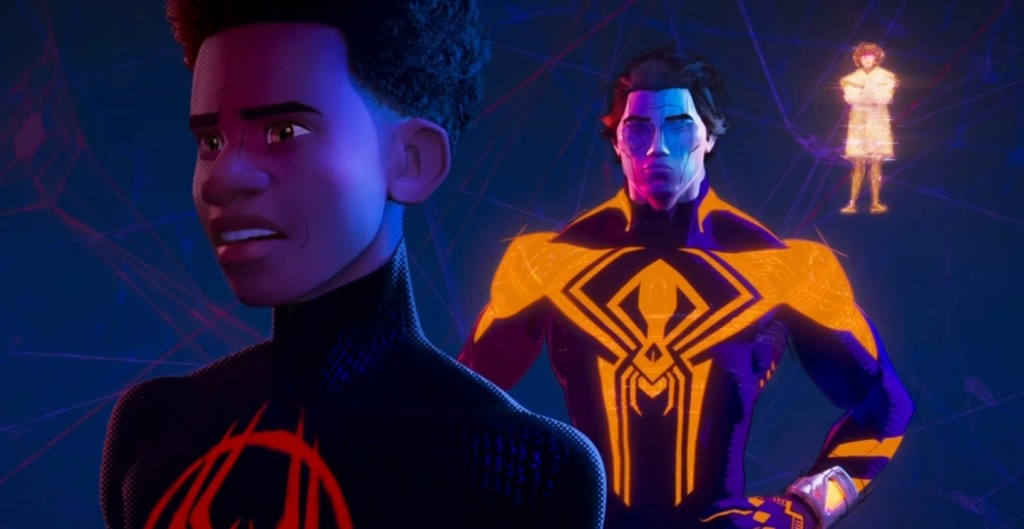
928 where countless Spider-Variants of all shapes and sizes chill out. In this onslaught of both new (the pregnant Jessica Drew; awkward mega-villian in ascension, the Spot) and the reliably familiar (the triumphant return of the robe and slippers wearing Peter B. Parker), you’re half-expecting the movie to collapse under it’s own weight and yet it miraculously never does.
The secret is that, while an impossible number of cameos and deep cut gags are obviously awesome, it wouldn’t mean much without the heart that propels the story. Not only do we get to spend much more time with Hailee Steinfeld’s Gwen, but Miles’ parents get some welcome fleshing out too as they struggle to understand their troubled son. The balancing act is as rock steady as Spidey on a tightrope and the performances (both the voice performances and the CG avatars) are all superlative, giving the story real emotional heft as we hurtle toward an agonising, cliffhanger ending (don’t worry, Beyond The Spider-Verse is due early 2024), however, a sizable amount of gasps and laughs will undoubtedly come from the weapons grade jokes, quips and gags that the movie unloads at regular intervals. The sequences that involve hundreds of Spider-Beings alone are surely destined to be played, replayed, slowed down and paused into oblivion in order to wring every single reference humanly possible out of it. From a cheer-inducing MCU connection (it’s not who you think), to the inclusion of Andy Samberg hilariously un-self aware Ben Reilly, to a throwaway gag involving a forgotten videogame-themed villain from the Spider-Man And His Amazing Friends cartoon series, hardcore Spider-Fans will be elated, but not at the cost of the casual viewer.

As funny as Jake Johnson’s struggling Spider-Dad, as cool as Daniel Kaluuya’s cockney slang spitting Spider-Punk and as touching as Shameik Moore’s ever-rootable lead, the Spider-Verse has yet another stone cold classic on its sticky-fingered hands.
A flawless sequel that literally does whatever a spider can.
🌟🌟🌟🌟🌟
 We Have Issues
One comment