
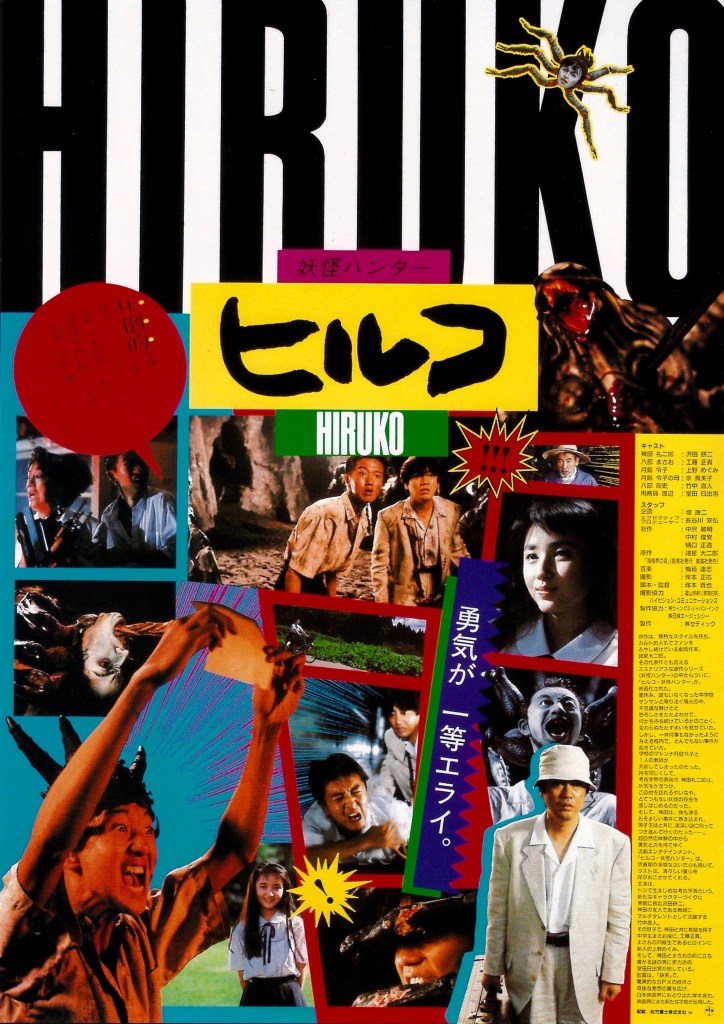
Swerving from the experimentally industrial metallic/phallic leanings of the Tetsuo movies to riffing on the gonzo energy of Sam Raimi’s Evil Dead movies, director Shinya Tsukamoto’s Hiruko The Goblin seemed to mark a move into more traditional and fun style of filmmaking. Of course, when I say “traditional”, the first images that probably spring to mind aren’t disembodied heads scuttling about the place or terrified humans trying to escape their fate by peddling a bicycle down the corridors of a deserted school. But compared to his feature debut, this adaptation of Daijiro Morohoshi’s Manga (or anything else the director has made, for that matter), this supernatural horror/comedy is weirdly lightweight, taking it’s most endearing ideas from recognizable, Western sources rather than forging ahead with his own, famously deranged, imagination.

After receiving a letter from his teacher brother-in-law involving the discovery of a mysterious tomb on the grounds of a local school, discredited and widowed archeologist Reijiro Hieda heads over to investigate. However, once he gets there he finds that not only has his brother-in-law, Takashi, is missing, but a young student, Reiko Tsukishima, has also vanished into thin air – something that has also deeply worried Takashi’s son, Masaso, who has deep feelings for her.
While Masaso and his two friends search for both on the school grounds during a summer vacation, bizarre occurrences have already started happening as the young student has begun to experience the rather unnerving condition of having his back suddenly start smoldering and smoking for seemingly no reason whatsoever only to form black scorch marks on his skin. However, this soon takes silver in the WTF Olympics when his friends start turning up without heads after being stalked by an invisible force that whizzes across the floor and whatever this malevolent evil is, it looks like it’s only getting started.
It’s at this point, Reijiro arrives and his belief of the supernatural that saw him disgraced by his colleagues seems to pay off nicely here as his home-made detection equipment manages to give him and Masaso a leg up when avoiding their inhuman attacker.
The creature chasing them is an evil spirit that is using Reiko’s disembodied head as a vessel and has given it thick, spidery legs to keep the hideous thing mobile and aside from that, it also has the ability to latch onto a victims face in order to manipulate their fondest memories in order to extract the information it needs. The information this grotesque humunculi is searching for will ultimately aid the unleashing of more of its kind from the subterranean tomb and if Reijiro doesn’t make the connections between the tomb, the creature and the scorch marks marking Masaso’s back, things will start to look exceeding grim for those hoping to keep their heads attached their shoulders…
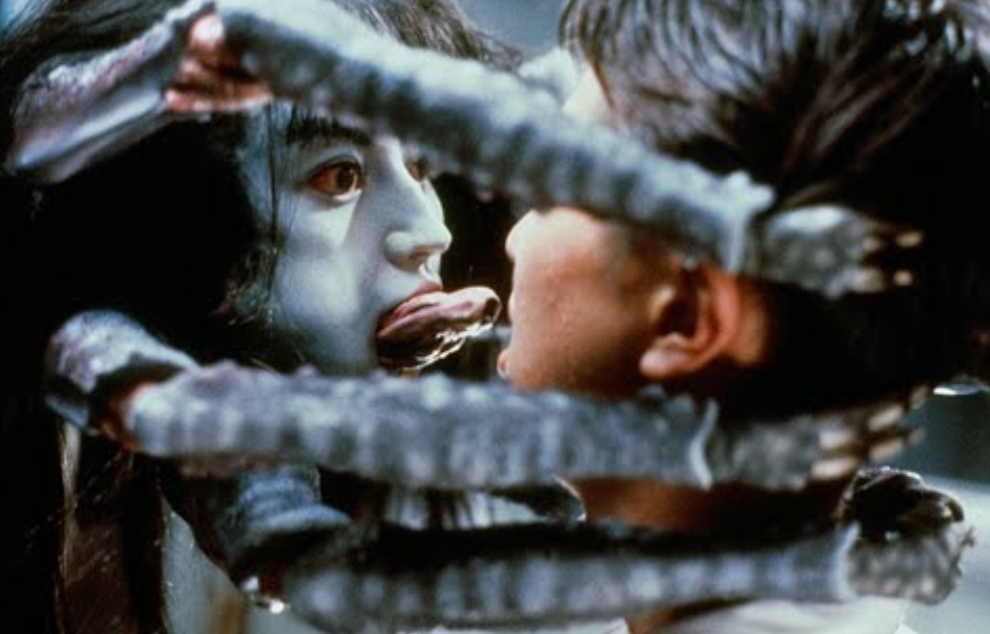
Essentially the severed hand scene from Evil Dead II stretched to feature length that features the infamous spider-head from John Carpenter’s The Thing in place of Bruce Campbell’s dastardly digits, Hiruko The Goblin is certainly an eccentric watch, but to those already battle-hardened in the realms of weird cult stuff, Tsukamoto’s attempt to make something more “conventional” feels too overfamiliar to make the impact you’d hope. Sure, that gonzo energy is present and correct and that Raimi-esque trope of making your hero a gibbering idiot/coward is very much in effect, but for all of its exaggerated leanings, the overall effect feels oddly ordinary.
Now I realise that describing a movie as “ordinary” may be quite the contradictory statement considering that it features a severed girl’s head with spider legs suddenly sprouting wings and buzz at our heroes with malevolent intent, but those familiar with the more goofy examples of Japanese genre fare such as Tokyo Gore Police and Zeram may find that the more trippy pleasures of Hiruko The Goblin being rather par for the course.
Still, I’ve always been a sucker for the way that Japanese movies tackled bizarre, atypical, monster effects back in those wonderful, pre-CGI days and while virtually every method used to realise its main creature may be obvious to the untrained eye, watching the mixture of puppets, models or just simply having arachnids legs stuck to the head of a willing actress proves to be endearingly fun.
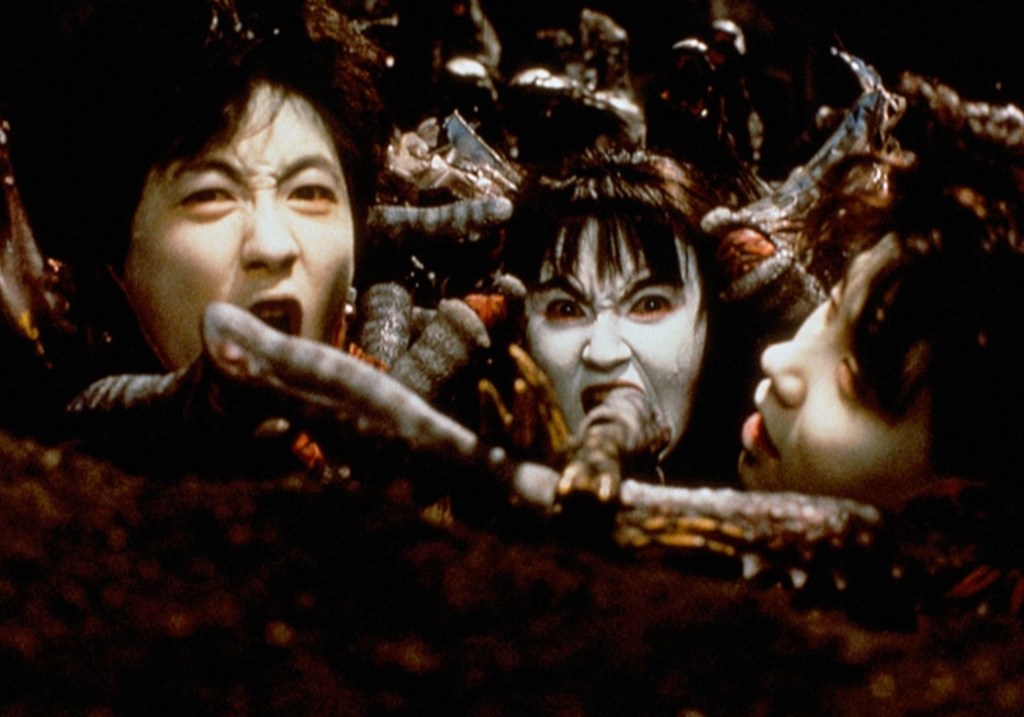
It’s the rest of the movie that doesn’t connect, however, with the bumbling antics of Kenji Sawada proving to entertaining but rarely funny even as he makes numerous, forehead slapping, Ash Williams style mistakes like not realising his Goblin detector isn’t plugged in or trying to ward off the insectoid creature with bug spray. In comparison, Masaki Kudou’s teen sidekick plays things far straighter as he has a dead father, a dead sweetheart and a sizable destiny to wrangle as the burn marks on his body have an unsurprising connection to the transpiring events.
However, while it’s great fun when taken as a throwaway fantasy horror, Hiruko The Goblin pales into insignificance when compared to other, deranged, Asian, fantasy horror films. For all of Tsukamoto’s talents at conjuring up unforgettable, brain melting imagery, there’s precious little here that can match the unhinged, poleaxing lunacy of La Ngai Kai’s The Seventh Curse and aside from the rather second-hand visuals borrowed from Raimi and Carpenter, the director goes on to pillage moments that strongly resemble Cameron’s Aliens and even Freddy Krueger’s chest of souls from the third Elm Street.
Maybe the movie’s tone was damaged by alleged tensions on the set apparently brought about by disgruntled opinion about the director’s youthful age (he was 31 at the time) or the fact that due to a ballooning budget, most crew members had to finish the movie for free, but whatever the reason, the twitchy energy of Testuo: The Iron Man is disappointingly in short supply.
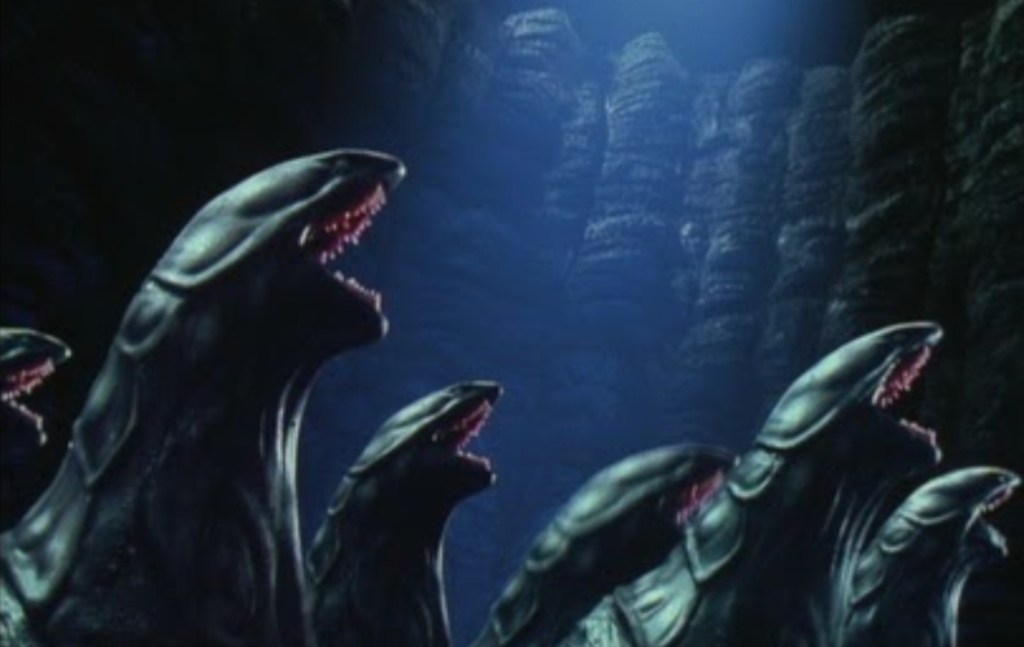
That’s not to say that Hiruko The Goblin isn’t worth a viewing. In fact, the movie is often a fun, diverting ride that competently wears its wacky influences on its sleeve and that boasts numerous sequences that proves that the Tsukamoto you hoped would show up is still present (a jarring moment when the shadow of the creature is cast against a wall as it crawls up a window is genuinely magnificent) – but all in all, the movie is weirdly lightweight when you consider that his previous film needed with a giant, biomechanical penis driving through the streets of Japan while announcing that the world we know it is over.
Not even human headed bug people can top that, I guess…
🌟🌟🌟
 We Have Issues