After Tim Burton’s Batman broke big in 89, the race was on to try and find the next gloomy, brooding, urban vigilante to bring to the multiplex, however, as the nineties wore on, Hollywood seemed incapable of providing one that could actually stick. In the parade of comic book and pulp protagonists that followed, hero after hero fell, either under the onslaught of bad reviews or from tepid box office that failed to cover the expensive budgets required to bring them to life.
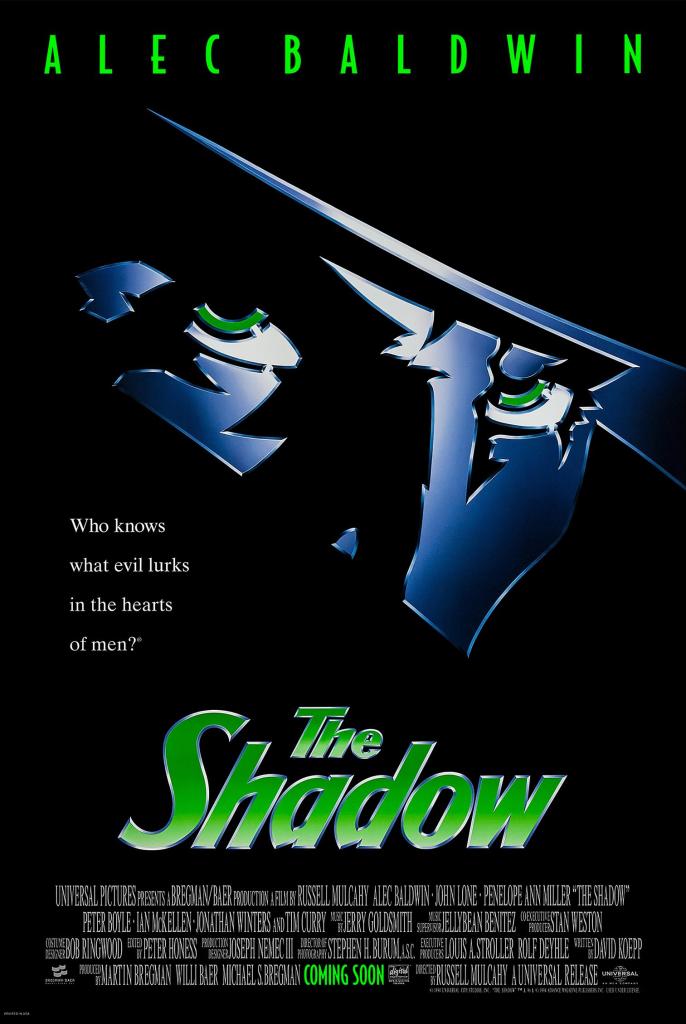
In a list that included the likes of Dick Tracy, The Phantom, The Rocketeer, Steel and Judge Dredd (even Batman himself eventually stumbled), only The Crow and Blade managed to hold fast until the wind changed in 2000 with X-Men, but lurking in the dark was one more hero who asked the pointed question: “Who knows what evil lurks in the heart of men?”
The Shadow has something of an idea, apparently…
In the wake of the First World War, westerner Lamont Cranston has managed to relocate to Tibet and reinvents himself as a drug dealing warlord known as Ying-Ko (nice work if you can get it, I suppose), but soon the womanizing despot finds himself kidnapped by the followers of a holy man known as Tulku who wishes to employ him – by force if necessary – to use his dark nature against the forces of evil by teaching powerful hypnotic techniques that bends perception in the weak minded.
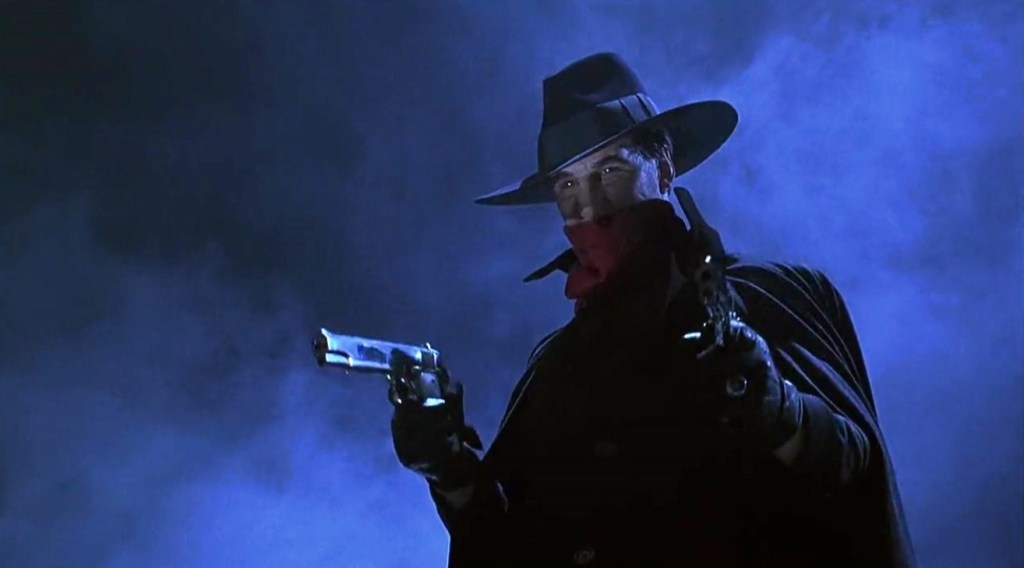
Returning to New York City seven years later with his brand new Jedi mind trick powers, Cranston rebrands himself as a crime fighting vigilante who has the ability to cloud men’s minds, appear practically invisible (save his shadow) and loudly declare such catchphrases as “The weed of crime bear bitter fruit!” without a single shred of irony. Aiding him in his crusade against crime is a network of spies and specialists that he’s coerced into his service as payment for him saving their lives at various points and his most trusty employee is cabbie Moe Shrevnitz who whizzes him around town at all hours in his taxi cab.
Of course, this wouldn’t be a 90s superhero movie if the main character only had unpowered gangsters to sock on the jaw, and so proving to be a threat to New York City and beyond is megomanic Ghengis Kahn descendant, Shiwan Kahn, who also was a protégé of the Tulku and has destructive plans of world dominance. Boasting the same, spooky abilities as Cranston, Kahn immediately starts using his freaky mind whammies on inventor Reinhardt Lane in order to construct an atomic bomb, but after metting with his daughter, the sultry Margo, Cranston realises that she might have a few mental powers of her own that might prove to be useful…
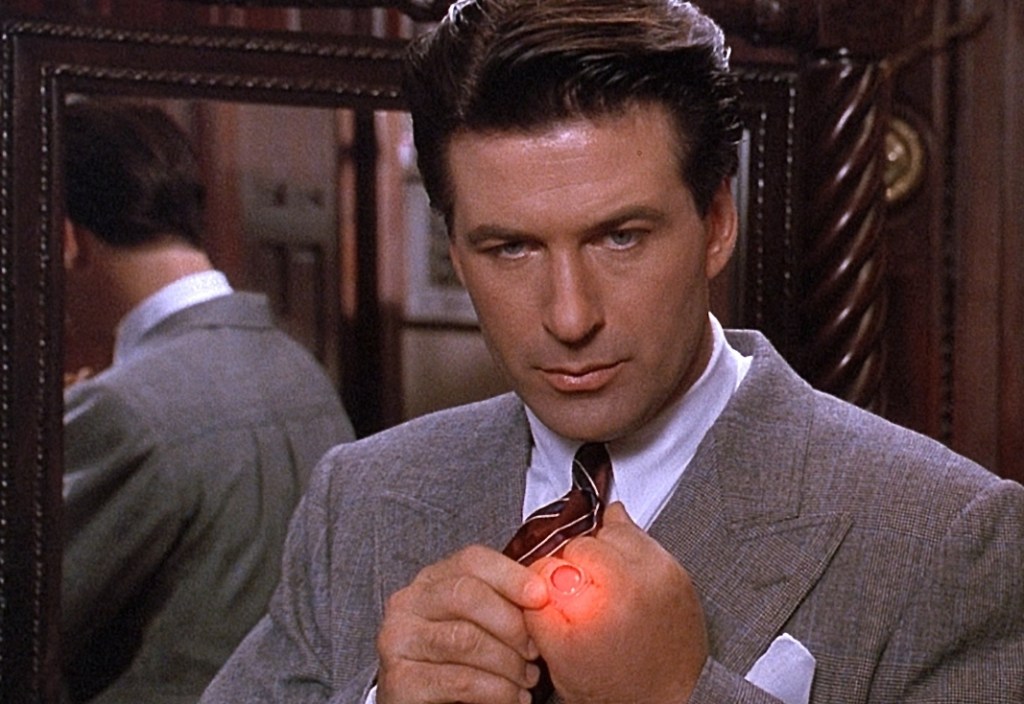
Once you shine a direct, probing light upon Russell (Highlander) Mulcahy’s The Shadow, it fittingly falls apart like shadows often do, and yet time has been oddly kind to Walter B. Gibson’s near-forgotten pulp hero who once stalked so confidently through print and radio plays. The reviews at the time were scathing, but in the many years since its release, other, bigger, more successful movie came along which strange covered much of the same material – troubled, entitled, well-to-do American finds himself in a Tibetan temple learning bizarre abilities to help them become an unkikely hero? Surely I’ve just described either Batman Begins and Doctor Strange, right? However, when it comes to big screen outings, Lamont Cranston beat them there by an impressive margin. And yet, when we directly contrast and compare the three movies, it becomes obvious where The Shadow’s problems arise – while Bruce Wayne and Stephen Strange spent ample time at their respective retreats, allowing them to enjoy rich, nuanced, character arcs, The Shadow seemingly can’t wait to skip over all that Origin Story 101 shit and dump a fully formed Shadow onto the streets of New York to do his thing with only a random title card to fill in the gaps. As a result, Alec Baldwin’s hero is surprisingly vanilla considering that he once was a Tibetan warlord who simply gave all that up because some bald guy and a magic dagger said so.
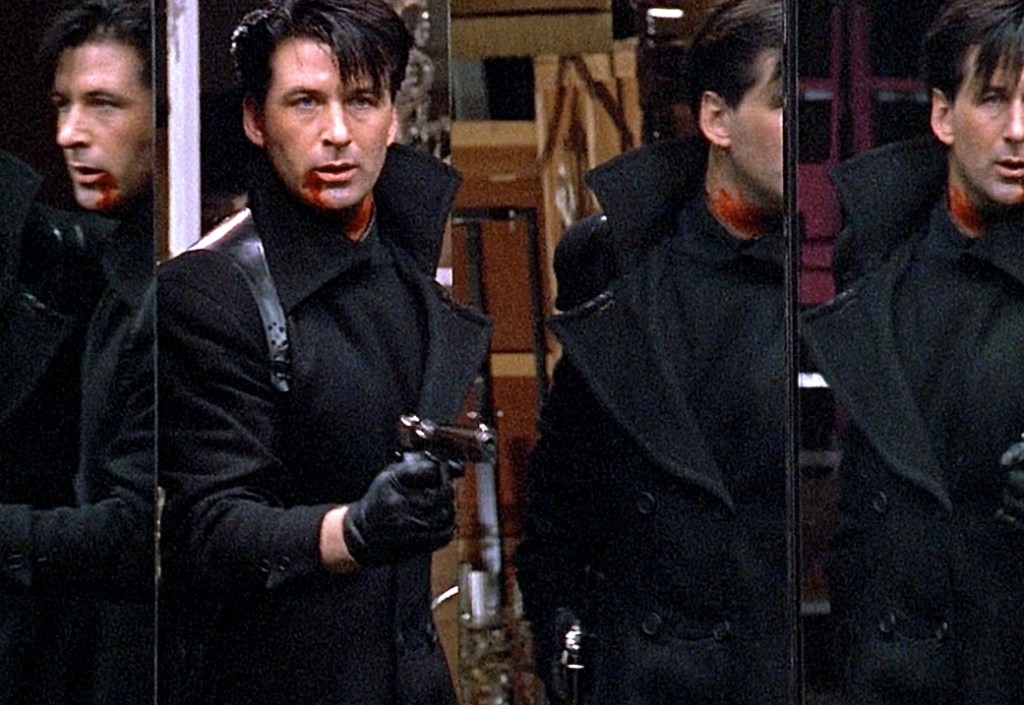
In a time before drunken phone recordings and tragic on-set accidents involving firearms, the Alec Baldwin Curse once stated that he wasn’t able to shoulder the lead of a blockbuster movie, but he turns out to be a pretty good fit for the character, with his voice in particular being very effective when rasping out one if the Shadow’s endearingly archaic catchphrases. Similarly, Mulcahy’s stylish eye gets a good work out as he excitedly latches onto the 30s aesthetic like a man possessed, using period filming techniques alongside some pretty decent effects to fully realise the Shadow’s abilities . Its just a shame that the movie can’t really decide what they actually are with his power levels being fairly nebulous at best. While the character’s talents have changed a fair amount during sixty years worth of radio plays, pulp stories and comic books, the movie keeps forgetting that he’s techincally not much more than a hyper-talented hypnotist and often confusingly presents his fake talents as the genuine article. If he can cloud men’s minds to render himself invisible to the weak minded, why is he leaving an Invisible Man type empty space when standing waist deep in water – and since when does being a hypnotist mean you have augmented strength or random bouts of telekinesis?
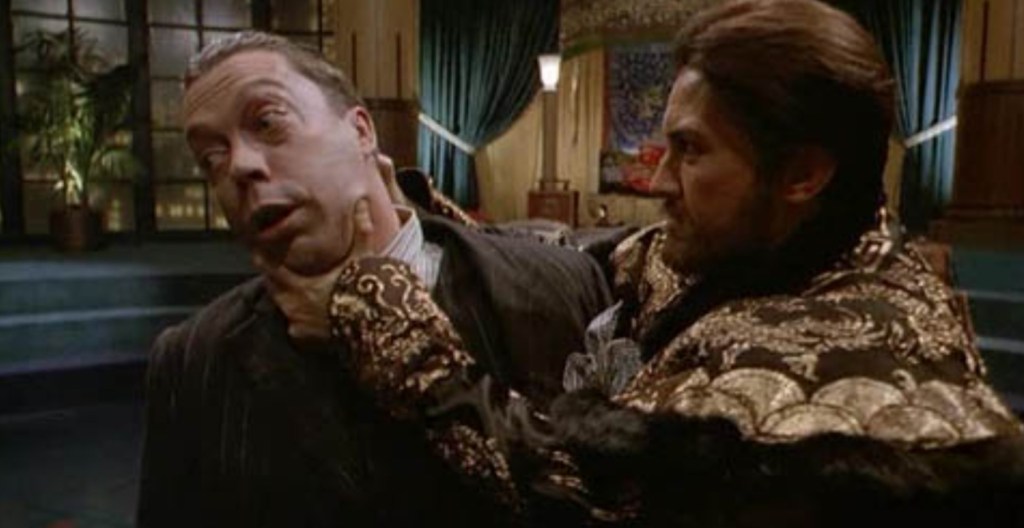
Still, if you tend not to worry about it too much (the director sure isn’t), then The Shadow is full of fun – if somewhat disjointed – action scenes that display way more imagination than some of the cast. Baldwin is having fun glaring at people under fake fluffy eyebrows and a big rubber nose (Cranston also can alter his appearance with hypnosis), but he has precious little chemistry with Penelope Ann Miller’s Margo, which is extra weird considering they are supposed to be able to read each others minds. They also oddly spend a lot of their exterior scenes chatting in the middle of the street suggesting that Cranston may have given up his crime empire, but he’s still not above a spot of jay walking. However, while John Lone proves to be a suitably shouty (if one note) villain, poor Ian Mckellen seems utterly lost as a scientist who spends almost the entire movie hypnotised so it’s down to Tim Curry to go for broke in a supporting villain role that sees him stubbonly refuse to stick to an accent and play a guy so weaselly he instantly reverts to an drooling, gibbering imbecile the second Cranston leans on him.
Impressively flawed, The Shadow is noticably better than its reputation would have you believe. Nevertheless, who knows what inconsistencies lurks in the plot of 90s superhero movies? The Shadows knows…
🌟🌟🌟
 We Have Issues