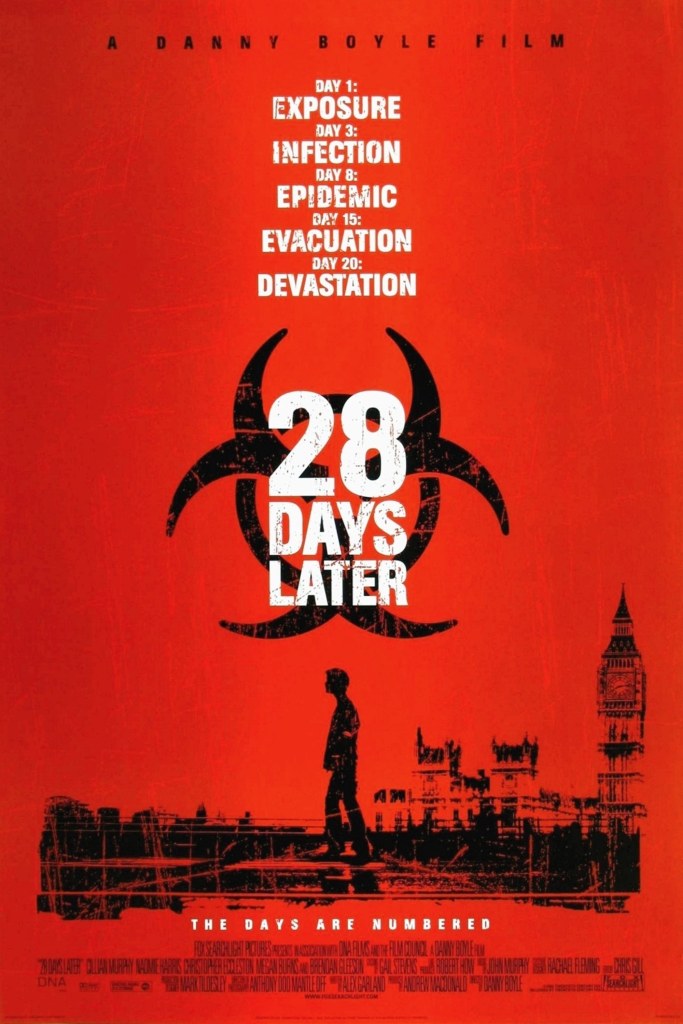
Despite the presence of slavering, gurgling ghouls presiding over an apocalyptic landscape, there’s been something of a debate over the years about whether 28 Days Later – Danny Boyle’s triumphant and haunting 2002 trip into horror – is actually a zombie film or not, and is an arguement that’s even been carried over to the film’s writer, the ubiquitous Alex Garland. However what is not up for debate is the fact that 28 Days Later is inarguably one of the most influential horror films of the post-millenium as it not only popularised the concept of the sprinting “zombie” (there’s that word again), but, along with Zack Snyder’s 2004 remake of Dawn Of The Dead, it gave the subgenre an almighty super-charged shot in the arm that’s still being felt to this day.
Emphatically proving that British horror wasn’t something to be fucked with and featuring a cast poised on the cusp of greatness, the story of a country ravaged by a virus born of pure rage managed to be one of the greatest zombie films ever made… if, in fact, it is a zombie movie at all…
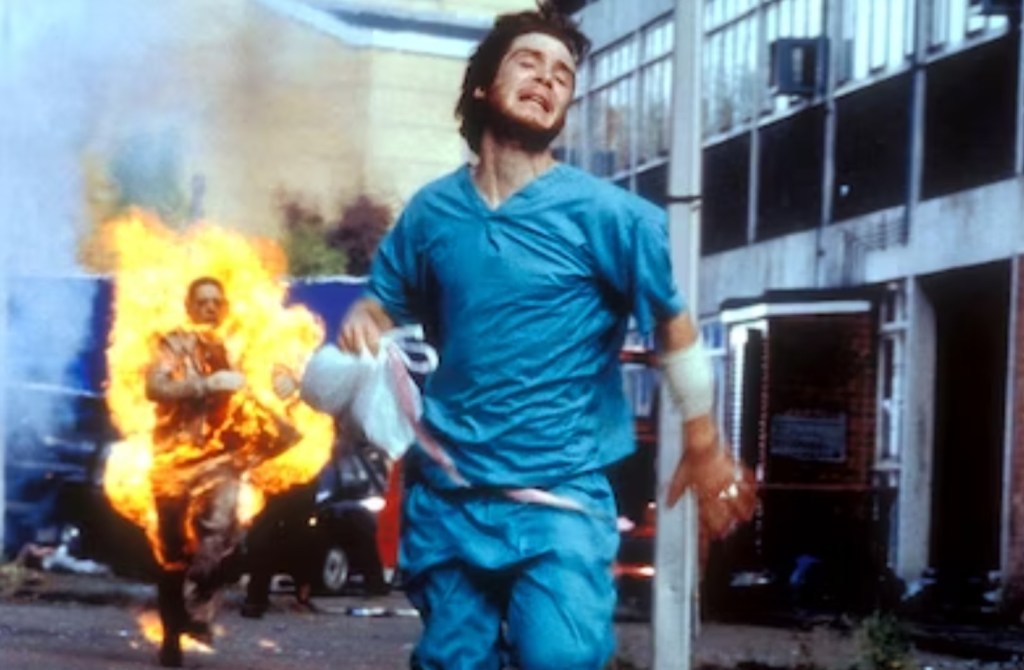
28 days after a rage inducing plague has spread across England, turning the majority of its citizens into writhing, rampaging, feral ghouls, bicycle courier Jim awakens in a deserted hospital after a traffic accident put him in a coma. Staggering out of the hospital in a confused daze, he wanders an eerily deserted London calling out for help until a visit to a church clues him in to the horrors that have occurred while he was dead to the world.
Thankfully he is saved from certain death by hardened survivors Selena and Mark, who take him in and give him the lowdown on their worrying predicament. Simply put, if even a drop of infected fluid finds its way into your system, you’ll turn into a screeching animal in mere seconds and so fast action has to be taken to eliminate the infected party lest they kill everyone else. Proving that she means what she fucking says, the ruthless Selena chops a wounded Mark to bits after a trip to Jim’s parents house goes horribly awry, thus proving her stance on this horrific, new normal, but hope may yet be at hand.
After being signaled to a local tower block by father/daughter duo, Frank and Hannah, both Jim and Selena take a much needed breath, but after being introduced by Frank to a repeating radio broadcast that claims mankind’s salvation and an answer to infection lay just on the outskirts of Manchester. Agreeing to pile into Frank’s black cab and embark on a dangerous road trip in order to find the source of the broadcast, the group incurs some devastating losses, but upon finally finding who sent the messages, the survivors soon find that things, especially in a post-apocalyptic England, can always get worse.
So firstly, lets address the crimson eyed, blood-spewing elephant in the room and fully tackle the subject of whether 28 Days Later is actually a zombie film or not. Well, if I’m being honest, the most truthful answer is confusingly: yes, it isn’t.
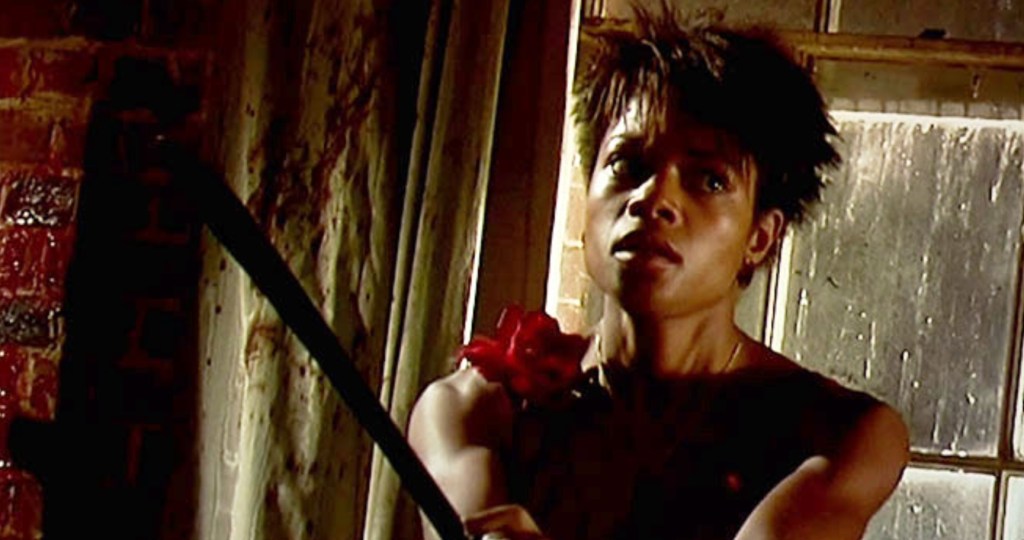
The main argument against is that the infected aren’t actually dead, but instead are beings riddled with an aggression enhancing bug fittingly dubbed the Rage Virus that reduces you to an animalistic berserker in less time than it takes to sneeze. However, if you dig a little deeper, Garland’s script boasts numerous nods to the zombie cinema of George A. Romero (not to mention the quiet, apocalyptic leanings of John Wyndham’s The Day Of The Triffids) that boasts numerous, familiar tropes fans of flesh eating corpses will no doubt be familiar with. Not only do we have a central, strong, black character in the form of Naomi Harris’ steadfast Selina who is very much in the same vein of Night Of The Living Dead’s Ben, or Dawn Of The Dead’s Peter, but in its second half, the film also betrays a noticable lack of trust in the wants and needs of the military much like Romero displayed in Day Of The Dead. Taken on this information, 28 Days Later is absolutely a zombie movie as it leans so heavily on tried and true undead lore. Still, whatever your opinion on the infected, they certainly proved to be a solid template for every zombie flick that followed in its lurching footsteps.
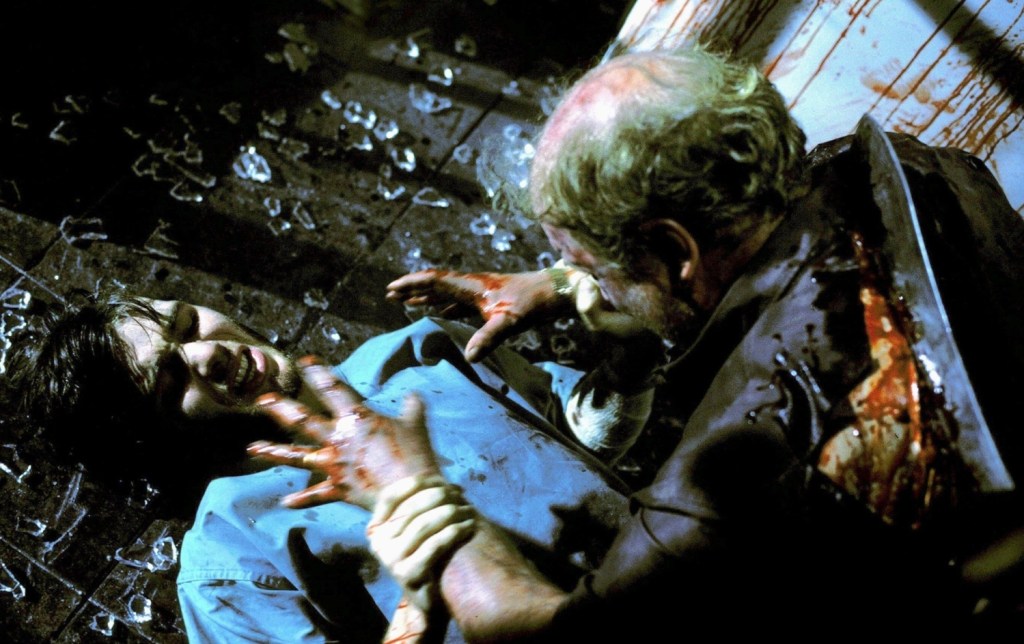
Despite everything I’ve just mentioned about it’s highly recognizable influences, 28 Days Later never feels like a homage or a greatest hits package and very much feels like its own animal thanks to Boyle’s solid grasp of the material. Boyle – who is actually no stranger to horror as those who’ve witnessed Trainspotting’s dead baby scene can certainly attest to – creates an air of suffocating menace thanks mostly to a stunning opening that not only ranks as one of the most distinctive scenes of the 2000s, but may be one of the greatest horror sequences ever made as a shell-shocked Cillian Murphy shuffles around a London that’s emptier than a matinee screening of Mobius. The scene was devastatingly eerie and unnerving back in 2002, but in these post COVID times, its positively chilling as I actually once walked through a deserted London during those troubled times. It’s so strong that you could forgive Boyle forcresring on his laurels and letting that moment do the heavy lifting, but he and Garland manage to carry on delivering memorable moments that prove to be both emotional and fucking terrifying.
Shot entirely on digital which gives everything a raw, urgent feel, the movie delivers a string of affecting moments from the heartfelt – the pseudo-family of Jim, Selina, Frank and Hannah bond either shopping for supplies or watching wild horse gamble in a field – to the calamitous – the entire closing segment where the military camp is beset from within to the instantly iconic strands of In The House, In A Heartbeat by John Murphy – and Boyle’s impressive cast (Murphy and Harris are joined by Brendan Gleeson and Christopher Eccleston) manages to deliver on the movies multiple arcs, be it Selina’s bloodthirsty stance on self preservation dropping at a vital moment or the transformation Jim from the movie’s “damsel in distress” to something disturbingly similar to the infected themselves.
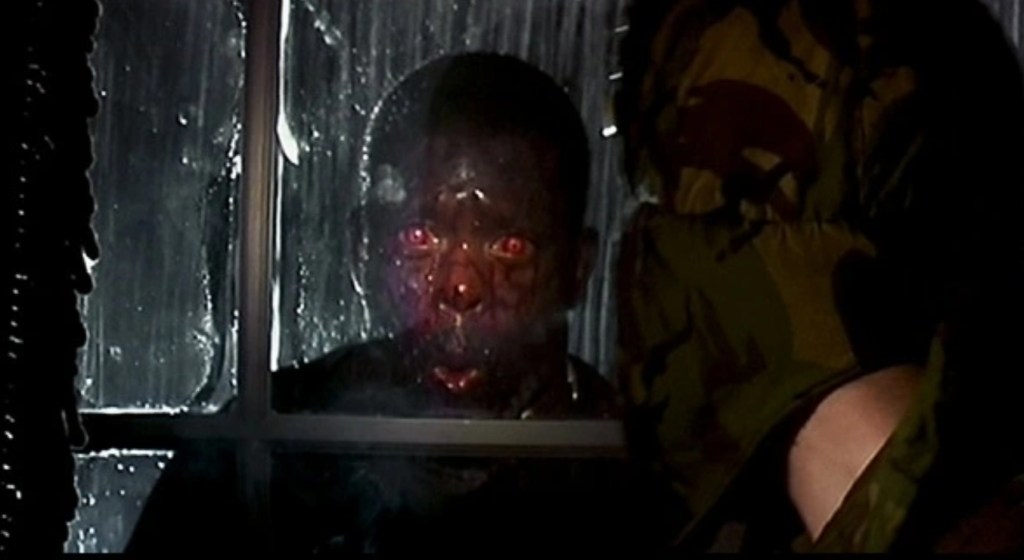
Regardless of what your opinion of how the infected should be classed, 28 Days Later is an irreplaceable stepping stone to the evolution of the zombie film and modern horror in general and it’s a legitimate shame that Danny Boyle hasn’t dipped his toes properly back into the realms of fear flicks since (the slasher/Hellraiser-esque ending to his sci-fi film, Sunshine notwithstanding), but regardless of what the next 28 day, weeks, months or years may hold, this is one frightener that will always remain infectious.
🌟🌟🌟🌟🌟
 We Have Issues