
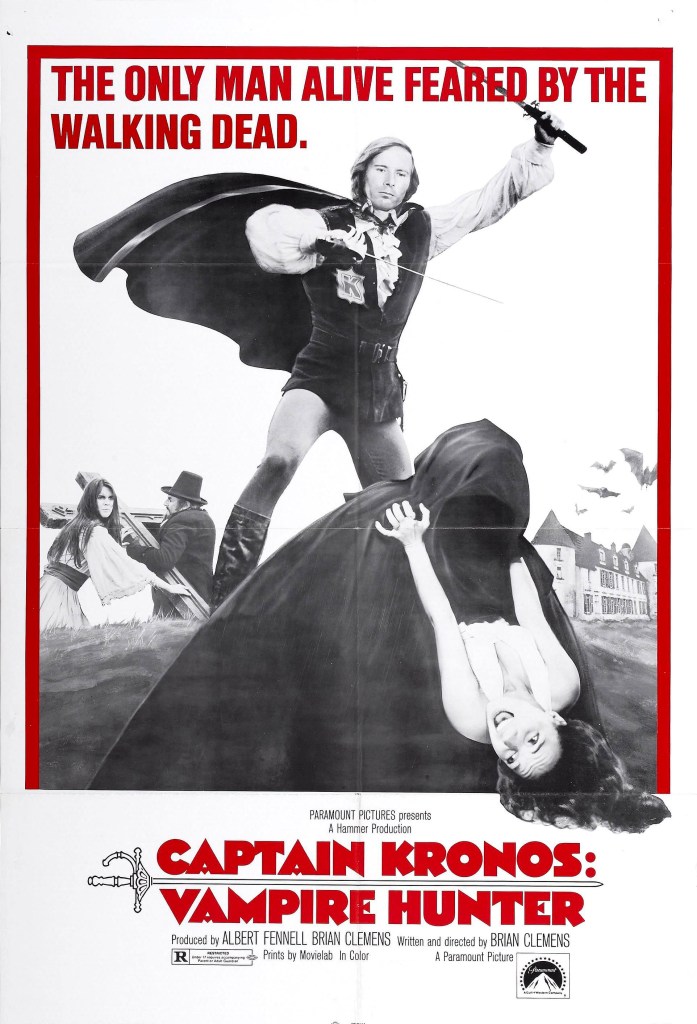
Despite making more vampire movies than you can shake a rubber bat at, Hammer Studio could never be accused of resting on their laurels. Be it a Countess pretending to be a vampire, a circus run by bloodsuckers or even simply planting Dracula himself amongst the likes of hippies in the 70s, they definately tried to mix things up – but in 1974, during the twilight years of their reign, the studio went for broke on two of the weirdest vampire movies ever made.
The second one was the hot mess of Legend Of The Seven Golden Vampires, a film that attempted to fuse the gothic world of Hammer with the Kung Fu stylings of Shaw Brothers and which gave us the sight of Peter Cushing looking the most confused of his entire career. However, the first was Captain Kronos: Vampire Hunter, a movie that looked at the vampire legend and openly mused: this could use more swashbuckling! En garde, suckers!
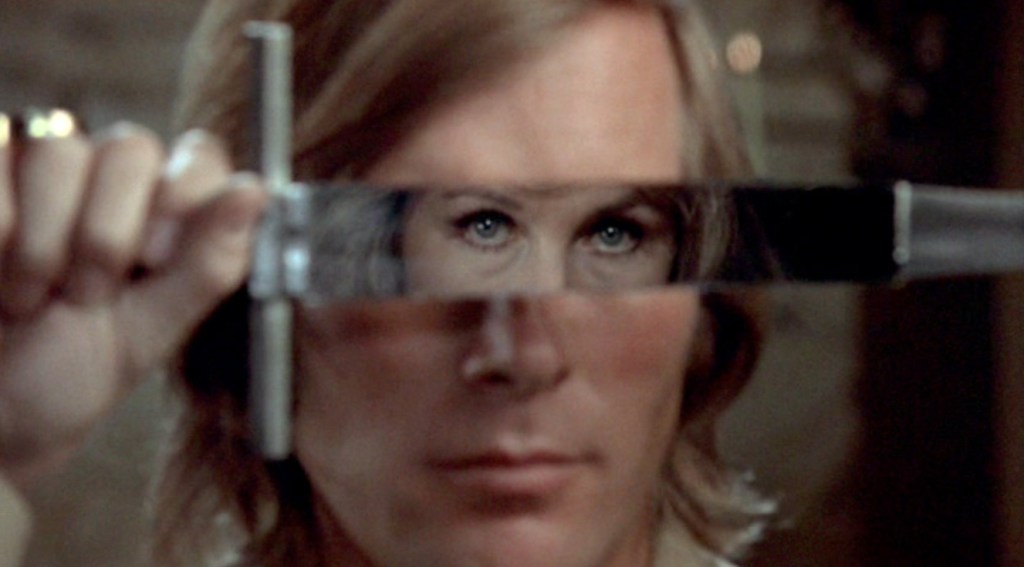
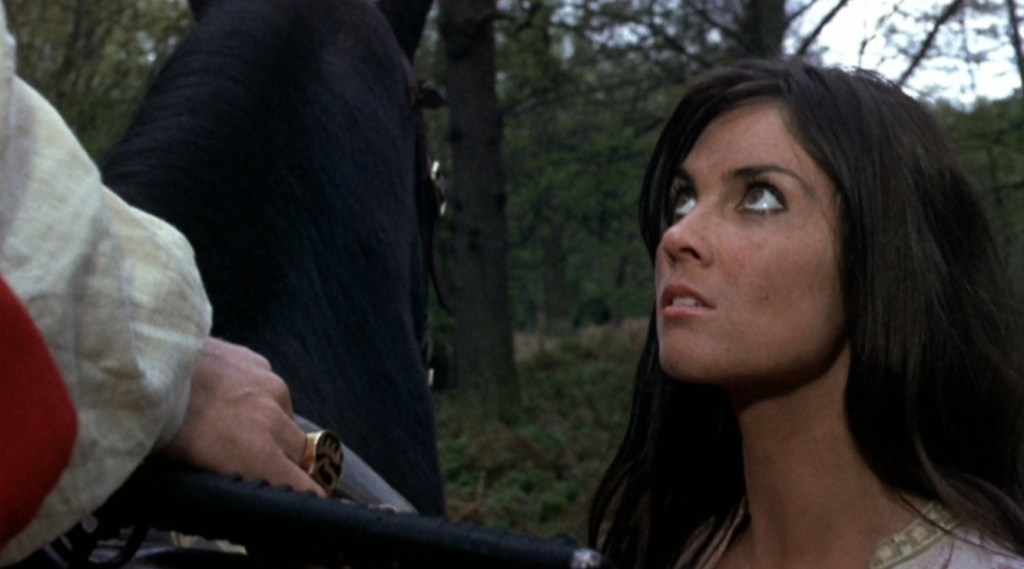
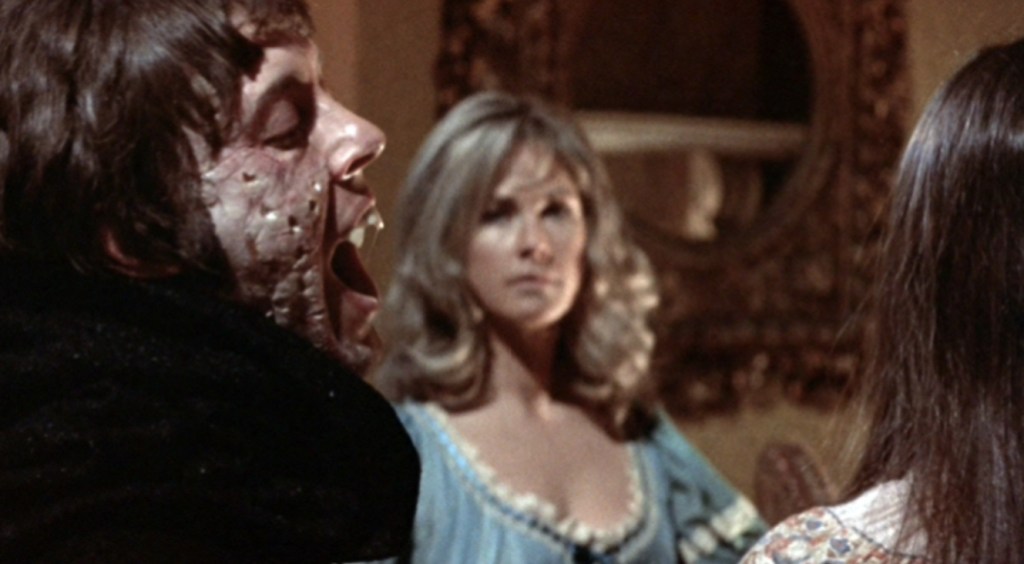
A small village is seeing a rather disturbing upturn of young maidens who are suddenly being drained of all life and left as aged, wrinkled husks and as a result, local physician Dr Marcus decides to call in his old Army Brother, the rather extravagantly named, Captain Kronos, to come sort it all out. Kronos arrives with his faithful companion, the hunchbacked Professor Hieronymus Grost and Carla, a local Romanian girl that Kronos frees from the stocks where she was locked for dancing on the sabbath.
After Grost performs a bunch of mystical tests involving the burying of dead toads to confirm what they’re dealing with, the results come back fairly conclusive: vampires. But while Marcus understandably is as sceptical as a flat earther in a Rand McNally globe factory, the hunched Professor starts laying out some intriguing facts. It seems that not only are vampires real and both he and Kronos have dedicated their lives to eradicating the sucky bastards, but apparently there are many different breeds of them too. The one that has descended on this village is one doesn’t feeds on blood, but instead far prefers to drain the lifeforce from its victim in order to sustain it’s own, unholy vitality. Further more, it seems that this mystery creature has some sway in the town as they bride local thugs to provoke Kronos into a fight in order to kill him.
Suspicion falls heavily on the Durward family, whose patriarch, Lord Hagen Durward, languishes, moldering in the family plot and whose matriarch, Lady Durward, has been bed-ridden since he passed, and so Kronos’ eye naturally falls upon their spawn, Paul and Sara. Can the confident vampire killer narrow down his suspects before more lives are drained like so much Sunny D at a kid’s pool party?
In the extensive pantheon of vampire films made by Hammer since Christopher Lee’s first turn in the cape back in 1958, Captain Kronos: Vampire Hunter ultimately falls somewhere in the middle, but while it may not be the best of the studio’s blood sucker epics, it’s certainly one of the more interesting examples that the house of Hammer produced. The main reason for this is the writing and direction of Brian Clemens, the man who had his hands in almost every homegrown action adventure show that ever turned up on British television. From writing scripts for The Avengers, to creating The New Avengers and The Professionals, Clemens obviously knew how to craft charismatic heroes in a slightly eccentric world, and you can tell he probably had a ball screwing around with the usual rules associated with your average Nosferatu.
Obviously the big change is that we’re dealing with a life vampire, and I have to be honest, seeing a lifeless, pretty, young girl rolled over only to see that she’s been reduced to a withered old crone is disconcerting in a way that’s way more primal than the traditional pair of puncture wounds on the neck that discreetly dribble blood. Also, the film gets a lot of mileage out of coming up with various anti-vamp techniques that would undoubtedly make Peter Cushing’s Van Helsing cock an inquisitive eyebrow in response. In fact, beyond the notion that a passing vampire can spontaneously cause a buried dead toad to reanimate, the movie gets an entire scene out of the heroes trying to figure out the right way to kill this particular breed. After they realise that flat out stabbing them with a sharpened stake doesn’t even so much as provide a drop of blood, they move onto hanging (as you do) and move onto fire next – and all the while their subject is still alive.
If Clemens is enjoying himself by scewing around with vampire lore, he’s positively having a ball will all the barely contained horniness that’s whizzing about the place with some cheeky bouts of laser guided sexiness. Not only does he include some thinly veiled double entendres that doesn’t even try to hide its true meanings (“I’m staying, if you’ll have me?”, “Oh… I’ll have you.”) but he also gives us a love scene where the camera intercuts between lips advancing on each other as they pass out of shadows suddenly, and then amusingly shifts to the Professor playing chess in the other room proudly announcing “Mate in one.”.
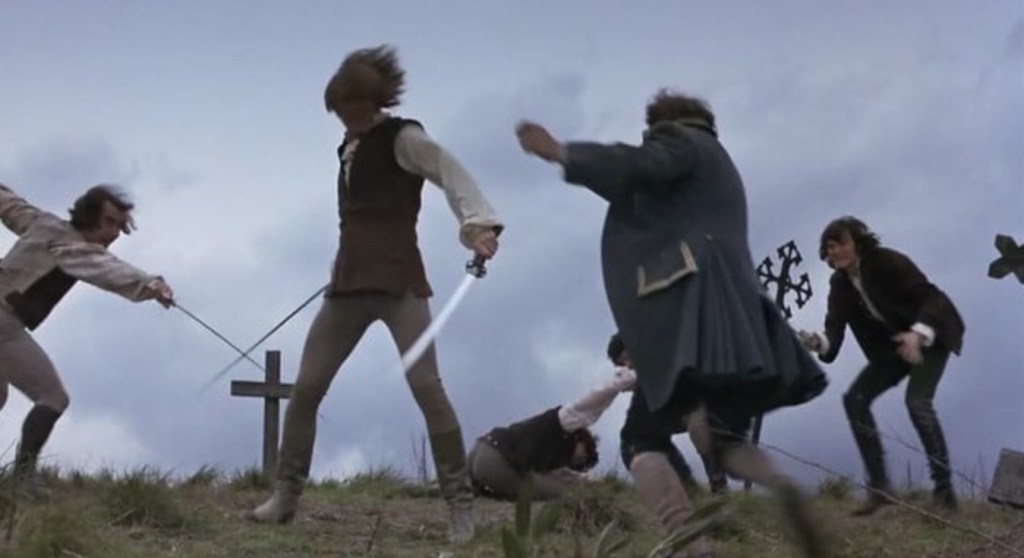
The final ingredient that keeps Captain Kronos feeling like something new in an overcrowded market is the fact that the movie has aspirations on being something of a little swashbuckler. However, while the movie doesn’t really have a chance to thrust and parry properly until the very end of the film, it gives Kronos enough cool shit to do in the interim, such as whipping his sword out, quick draw fashion, to slit the throats of a trio of rapscallions before their blades can even leave their scabbards. It’s all worth it though when the finale goes full Errol Flynn and features a stonking duel that has all the flashing blades and dramatically knocked over candlesticks you could wish for.
However, while Horst Janson cuts a genuinely dashing figure in the title role (with an assist by Julian Holloway on dubbing duties), John Cater delivers exposition with aplomb and Caroline Munro provides the glamour, Captain Kronos never achieved the franchise the filmmakers were obviously striving for. It’s odd, because while the flick never fully achieves being much more than a curious, fun oddity, it’s a far more accomplished mash-up that Legend Of The Seven Golden Vampires and it seems tailor made for follow-ups in a way that makes far more sense than Hammer managing to score three movies out of the Karnstein movies (which Kronos actually references).
While good, not great, Captain Kronos: Vampire Hunter deserved at least one more outing – I mean, Blade got three and they’re basically in the same line of work.
🌟🌟🌟
 We Have Issues