
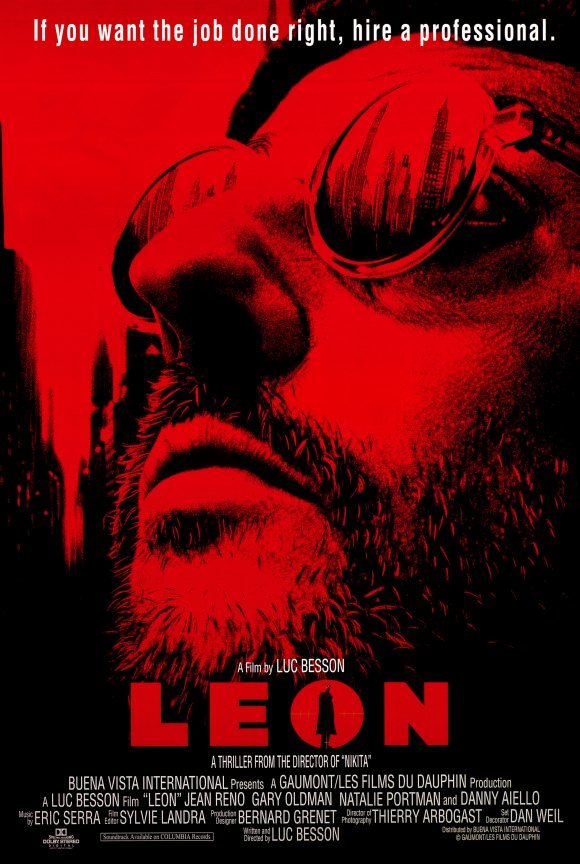
When it comes to the nature of the mysterious, almost ethereal hitman, no one has cornered the market quite like Luc Besson. You see, while other directors would be content to simply have their central assassin remain a stylish enigma, Besson repeatedly found a way to make his killers for hire flawed, three dimensional beings while still maintaining that borderline mysterious edge. The director impressively showed his chops with La Femme Nikita back in 1990, but after a shift to America, he somehow bettered it with Léon (aka. Léon: The Professional), a complex, violent and oddly touching action thriller that not only gave Besson regular, Jean Reno his best role, it also provided us with a killer debut for Natalie Portman and arguably Gary Oldman’s finest villain role during a decade that was fucking heaving with them. Of course, as the inexorable tick of time makes some of its plot points ever more problematic (and Besson’s personal life since hasn’t exactly helped), the film still stands as something of a magnificent achievement despite the controversy.
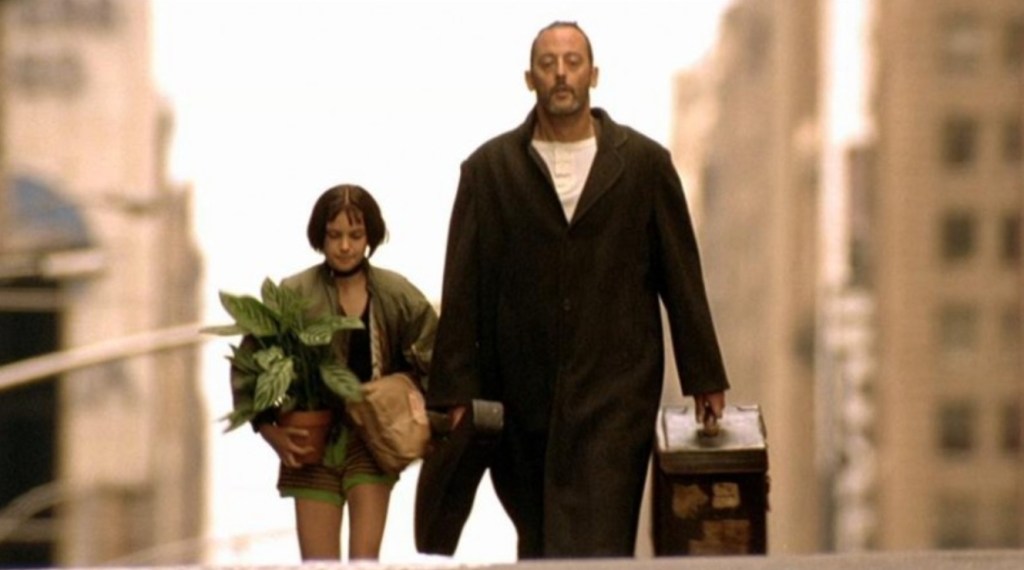
Léon is an Italian American hitman working for a mob boss named Old Tony in New York City and despite the fact that he seems a little slow mentally, he has an almost inhuman talent to carry out the hits he’s tasked with. Aside from the fact that he slaughters people for money, Léon leads a very simplistic life, caring for no one else except his beloved plant, but one day his ordered life is thrown into turmoil with the arrival of the recently orphaned Mathilda.
Mathilda is a lonely twelve year old girl who lives down the hall with her abusive, drug dealing father and her equally shitty two-family and when his shifty antics put him in the bad books of a drug-crazed maniac known as Stansfield, her entire family is killed while she’s out getting groceries, including her four year old brother who was the only one of her rotten relatives who was worth a damn.
However, after Léon saves her life, Mathilda discovers what he does for a living and she makes her savior a deal – teach her how to “clean” and she’ll cook, clean for him and teach him to read with the end goal being revenge against the man who killed her brother. However, things aren’t quite so simple when it’s revealed that the pill popping Stansfield isn’t your average family killing, criminal berserker. No, on top of everything else, Stansfield is also a deeply crooked DEA agent who has figured out that the family he and his men killed is missing exactly one child.
As Léon and Mathilda’s relationship grows evermore complex, Stanfield’s reach grows ever closer.
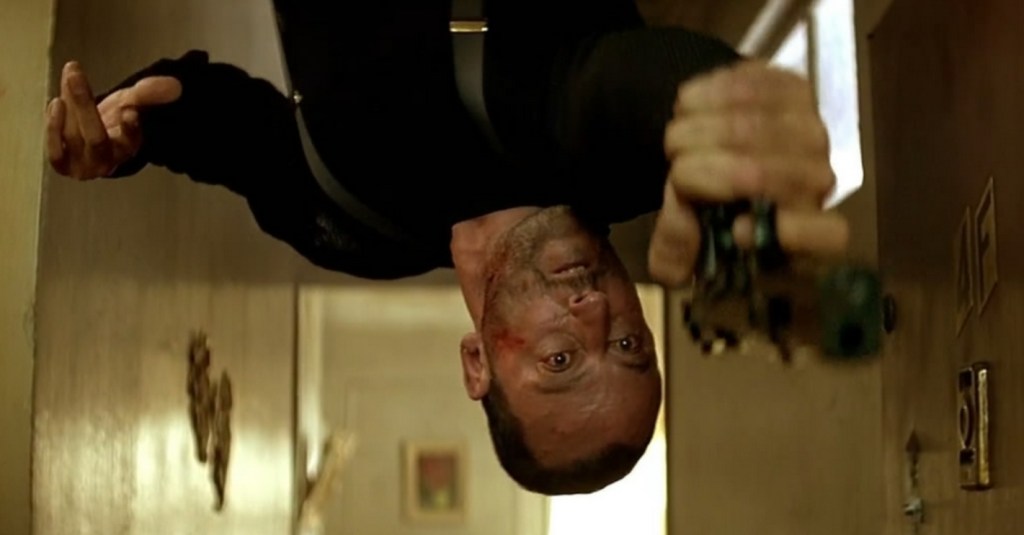
So, I suppose we should start with the more uncomfortable stuff first and while Portman delivers one if the finest child performances you’ve ever seen, there are times where the movie skirts dangerously close to taboo, especially when it deals with the love story that transpires between a child and a grown man. The movie explains it away well enough – just about, anyway – as Léon’s vaguely spelled out mental deficiencies push him on an equal footing with his young charge. But while scenes where Mathilda professes her love to him are dealt with Léon visibly reacting in shock, moments where Portman is clearly sexualized while playing dress up as the likes of Madonna and Marilyn Monroe are deeply uncomfortable.
Still, dodgy Lolita vibes aside, Léon still manages to be a wonderful character piece which gives its three main actors plenty of room to craft their roles while being sandwiched in some of the best action sequences of the decade. Besson captures it all with his glorious anamorphic visuals that somehow merge John Woo firefights, impressive character work and European sensibilities seamlessly into one, touching whole.
Reno provides the heart with his hulking, lethal lug having his basic and empty world turned upside down providing the bedrock that the film sits on. Despite the fact that this guy can massacre an entire room of heavies and single handedly fight an entire SWAT team to a standstill, he’s still essentially a big, innocent, sensitive man-child. Conversely, Portman, skillfully out acting literally everyone in a 600 foot radius, carries the weight of the movie on her thirteen year old shoulders like she was born to it and the fact it took her arguably years to match it (she’s equally as astonishing in Black Swan) isn’t so much a slight on the actress as it is a testament to her debut.
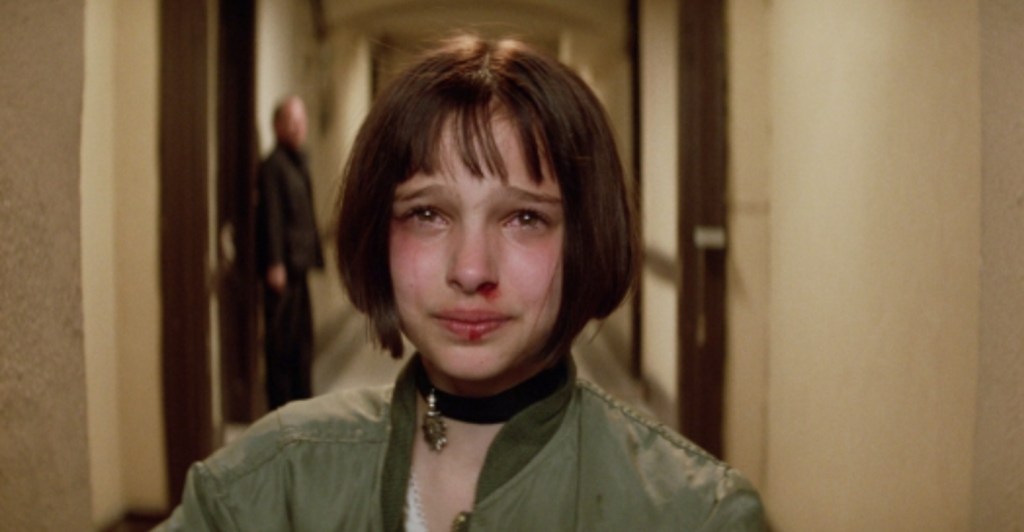
Of course, I’d be remiss in my duties if I didn’t offer the apex of Gary Oldman’s 90s villain period and his scenery chewing turn as the Beethoven loving, screaming Stanfield maybe somewhat illogical (how the fuck does he hold down a job with the DEA when he’s constantly wittering on about insects and composers like an utter maniac), but in a decade where he played a dreadlocked drug dealer, a Russian terrorist, a futuristic supervillain and fucking Dracula, the sight of him bellowing “EEEEEEVVERYYYYY OOOOOONNNEE!!!!” at a quivering subordinate could actually be one most famous line readings of the entire decade.
For all his faults – which we won’t go into too deeply here – Luc Besson is one of the few directors who can convincingly switch from bombastic, stylized, Hollywood action to a deliberate, nuanced character study without it feeling utterly disjointed and when he does shift things into fifth gear, it usually results in some overwhelmingly tense and intelligent set pieces.
The opening scene, which sees Léon dispatch a penthouse full if thugs in order to put the shits up their heavy breathing boss is a practically perfect version of that set piece that every hitman film has where the ghost-like abilities of said assassin is exercised for all to see and while it strains credulity a bit to suggest that Reno has the ability to vanish like fucking Batman, it gets the point across beautifully. Speaking of getting the point across, the moment when Stansfield, hopped up on mysterious pills and hearing classical music in his head, decides to obliterate Mathilda’s family may also be cooler update of the kind of scene you use in order to establish the villain’s credibility, but it’s still utterly shocking and exhilarating in equal measure. However, it’s the final siege that works best as the accumulated emotion builds to a point where you’re literally sitting on the edge of your seat as Besson wrong foots you and keeps you off balance the entire time as Léon plays a lethal game of hide and seek with an entire police department.
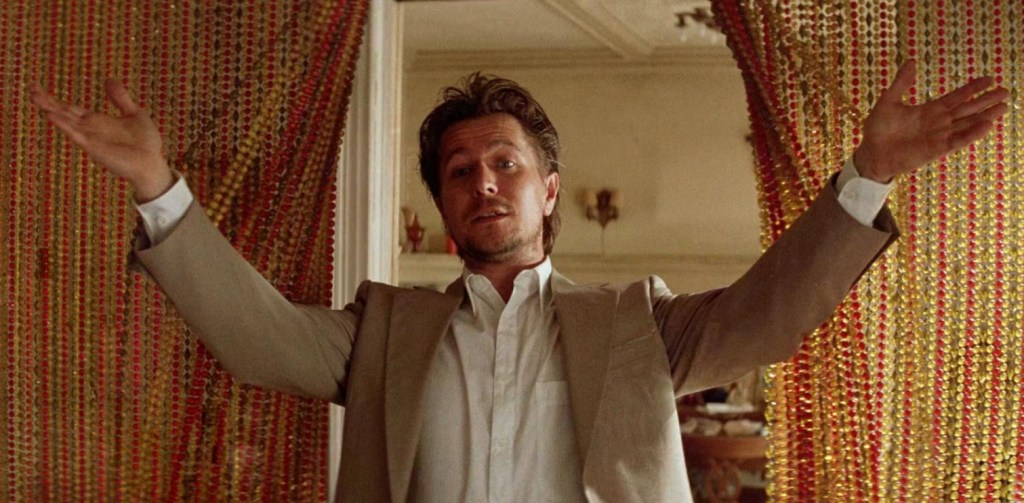
If you simply can’t get on board with Léon because of the increasingly checkered past of its director, then that’s perfectly understandable (in comparison, the director’s cut tends to push things too far in an uncomfortable direction for my tastes), however, for the performances of Reno, Portman and Oldman alone, it’s a film that just can’t be ignored outright.
🌟🌟🌟🌟🌟

 We Have Issues
Leon, The Fifth Element and especially Messenger: The Story of Joan of Arc are still movies that I can admire despite the troubling history of their director. I’m glad that we as subjective movie lovers can be open in all our own reasons for taking about movies and TV shows despite so much that has come to light over time. I remember Leon fondly enough for my first intro to the graciously talented Natalie Portman. Jean Reno who I saw previously in The Big Blue intrigued me as to what kind of roles he could make memorable, which he’s certainly done in Mission: Impossible and The Da Vinci Code. And Gary Oldman’s unique talents for playing villains is most fittingly served here right down to Stanfield’s final demise. Leon is a good example of how a movie despite all its inevitable controversies can still hold up for audiences with the natural freedom to take whatever they want from it. Thank you for your review.
LikeLiked by 1 person