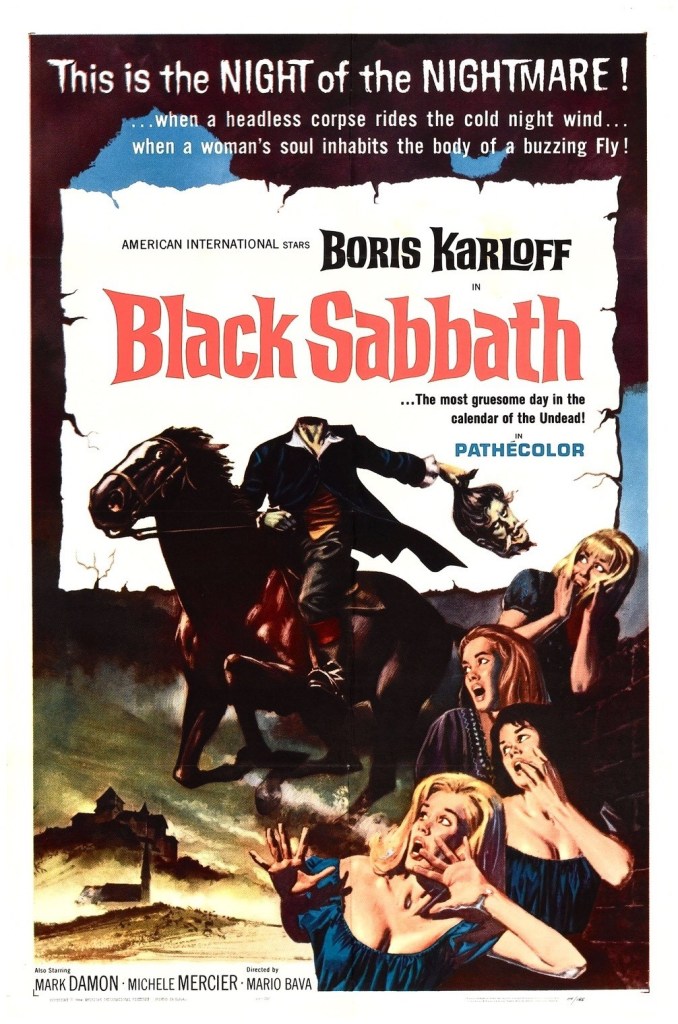
Just how exactly does a film that isn’t a household name get to be so ridiculously influential? Think I’m overacting? OK, stick with me here: for a start, a band with the rather bland name of Earth spies the title above a cinema with a line of people heading inside and are bemused at the fact that folks would line up to be scared and thus changed their name to – you guessed it – Black Sabbath. Next up, a young filmmaker named Quentin Tarrantino decided to use Mario Bava’s anthology movie as a template when starting to plan a modern noir movie that would eventually become the instant classic Pulp Fiction. Even the film’s contents reach its long, creeping fingers further out into cinema history to form echoes of deja vu in other genre flicks you may not even realise was riffing on a movie made back in the sixties. But that’s the lot in life of Mario Bava, a filmmaker who seemed to create the blueprint of a lot of modern cinema without even trying.
Settle down and clutch frantically at the arm of a loved one as Mario Bava leads us through a trio of tumultuous tales that covers a multitude of horrors from classic tales of bloodsucking beasts, to more modern, giallo style thrills, to some good old fashioned ghostly goings on.
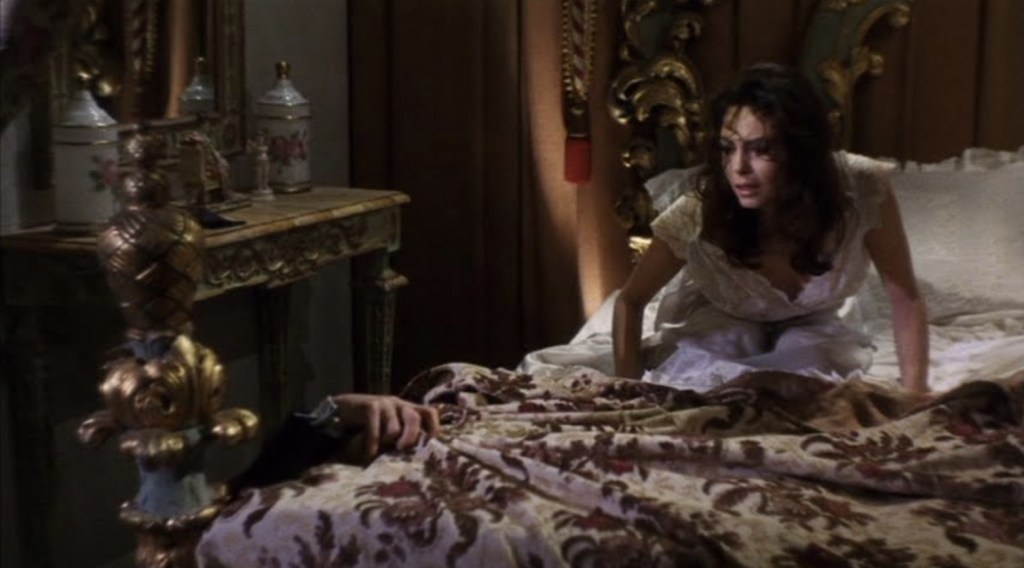
The first tale goes by the ominous name of The Telephone and deals with French prostitute, Rosy, who starts getting threatening phone calls from a guy named Frank. This would be rather unsettling to begin with, but when you add in the fact that Frank used to be her pimp and went to jail because she gave testimony against him means she’s potentially in really deep shit – especially since his sinister calls indicate that he can see her. Rosy starts feeling a little better when she calls her former lover, Mary, and begs her to come over and help her – but that’s when things start to get really complicated.
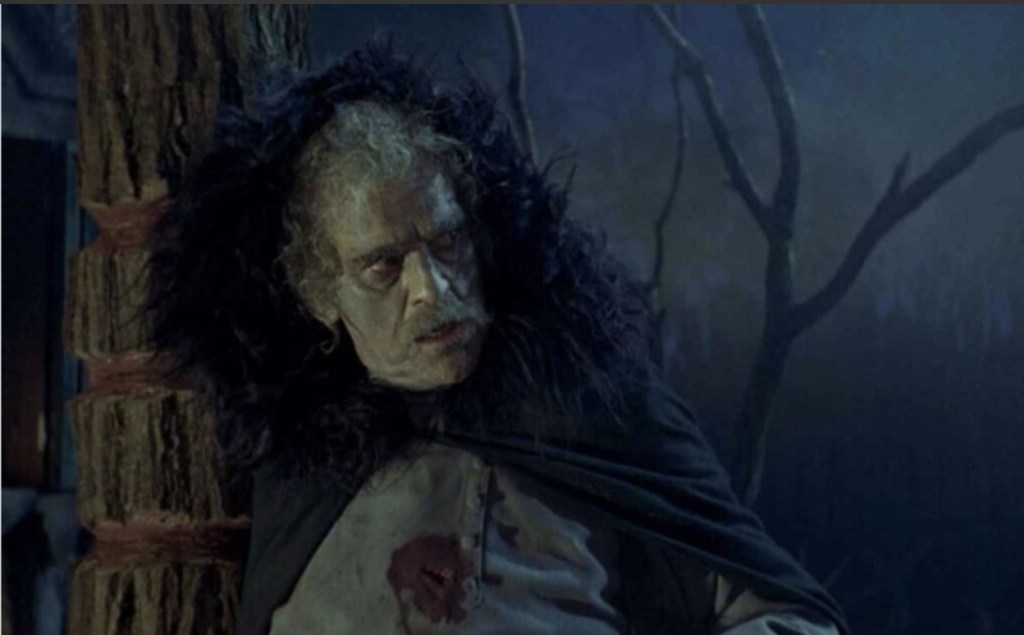
The second tale is called The Wurdulak and weaves the telling of a young nobleman named Vladimir D’Urfe is riding around 19th-century Serbia when he stumbles across a beheaded corpse with a knife through its heart. Investigating this grisly discovery he finds a family living in fear of a creature named the Wurdulak which are essentially Vampires who pick their victims with far more cruelty. The catch is that the patriarch of the group, Gorca, had left to hunt the beast either strict instructions to kill him if he returns later than five days – buy when he shambles back when the five days are up exactly, both Vladimir and Gorca’s family have to work out whether he’s still human or a beast that’s irresistibly driven to kill his loved one.
The last story is entitled “The Drop Of Water” and relates the truly unsettling story of a nurse who is called to the bedside of a medium who has recently died of a heart attack by her deeply superstitious maid in order to help prepare the body. But after the nurse thinks it’s a good idea to swipe a valuable ring off the gnarled corpses finger, the buzzing of a persistent fly and the constant sound of dripping water signals that she’s fucked up to horrific degree.
Anyone familiar with Mario Bava’s output surely knows what to expect from Black Sabbath (not to be confused with Black Sunday, also helmed by the Italian innovator) and with three, vastly varied stories to stretch his visual talents and gift for atmosphere on, any fans of classic horror must feel embarrassingly spoiled for choice. However, I feel that you have to choose wisely before picking which version you watch because there are a fair few differences between the original, Italian version and American International’s re-edited redub. If you pick the Anerican version, you’ll get the benefit of having Frankenstein’s Monster himself, Boris Karl off, having a whale of a time introducing each story like he’s Alfred Hitchcock and while it’d great fun to watch him mug his ass off, it’s the re-editing The Telephone that seals the deal.
Essentially, the removal of the original score and a shifting of plot points such as the fact that Rosy is no longer a call-girl and she and Mary was previous in a love triangle with Frank and are no longer lesbians, means that The Telephone loses that exact, slightly sleazy tang that goes hand in hand with some stellar lighting and scrumptious set design to make it feel very much like a prototype to a Giallo film. Amusingly enough, the first half of the film is practically identical to both When A Stranger Calls and Scream with the only real things separating them is a lack of Carol Kane or a sizable knowledge of pop culture. From there we take a serve into Diabolique territory where we discover that someone hasn’t exactly been telling the truth before the stocking strangling twist.
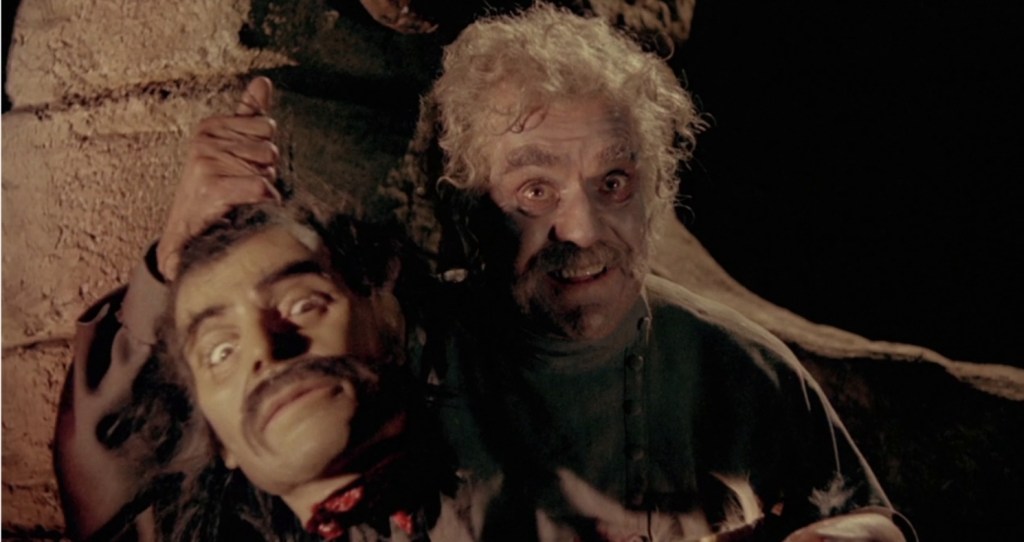
It’s a great opener (although it comes second in the American print) and it’s followed up by The Wurdulak which visually falls more in line with Bava’s iconic debut, Black Sunday due to the time period and the more classic nature of the piece. It’s essentially a rejigging of a typical vampire story, but once again, Bava’s visual eye and a legitimately chilling shift in the legend (Wurdulak’s are only driven to kill and turn the ones they love) give it the twist to make it something special. Of course, it doesn’t hurt that we have Boris Karloff lit with garish filters and fixing everyone with the baggy stink eye while his family try to figure out if he’s still human or not (his shitty attitude suggests no), but the way the family eventually turns on each other soon gives the segment the feel of John Carpenter’s The Thing and some of the imagery (an undead young child begging to be let in) is highly reminiscent of Tobe Hooper’s adaptation of Stephen King’s Salem’s Lot.
However, as chilling and stunning as both The Telephone and The Wurdulak both are, it’s the shortest entry of the three that proves to be the most memorable as The Drop Of Water tells a brief, but incredibly effective, ghost story in the vein of Edgar Allan Poe. Simply put, a nurse blissfully disinterested in the matters of the supernatural, or having any respect for the dead, chooses to pinch the ring off a recently deceased psychic and promptly pays the price, but it’s the nature of the compact story and how Bava structures it that proves to be so effective. For a start, the rictus grinned, gremlin-faced corpse that plays the dead old body may obviously just be a rubber dummy, but the way Bava utilises it means you can’t take your eyes off the fucking thing because you just know at some point, the twisted dead bitch is gonna move sometime. And so the tension builds as buzzing flies and maddening drips team up with jarring jump scares of flopping hands and prolonged shots of that gurning face (highly reminiscent of the victim’s in The Ring, by the way) in order to keep you just as off balance as the thieving nurse is. And when the ghost stuff finally does kick in, that dummy somehow gets even creepier as it floats across the room.
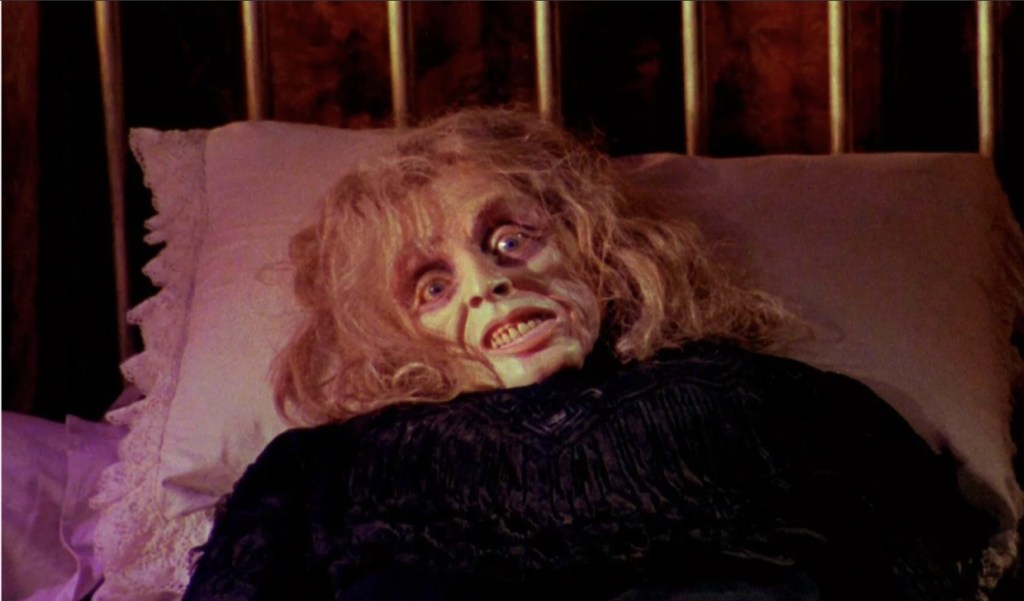
As anthology horror movies go, there’s always a sense that you have to take the good with the bad as there’s always at least one entry that let’s the team down. And yet Bava effortlessly makes a mockery of this conceit, delivering three completely separate stories that are still linked by his impeccable style and yet doesn’t contain a weak one in the bunch. More modern viewer may watch and wonder why I’m making such a big deal over a grinning dummy lying in bed, but those in the know will realise that that twisted old dead biddy was one of the creepiest things of the entire decade.
🌟🌟🌟🌟
 We Have Issues
Bava was the greatest Horror director…EVER!
LikeLike