
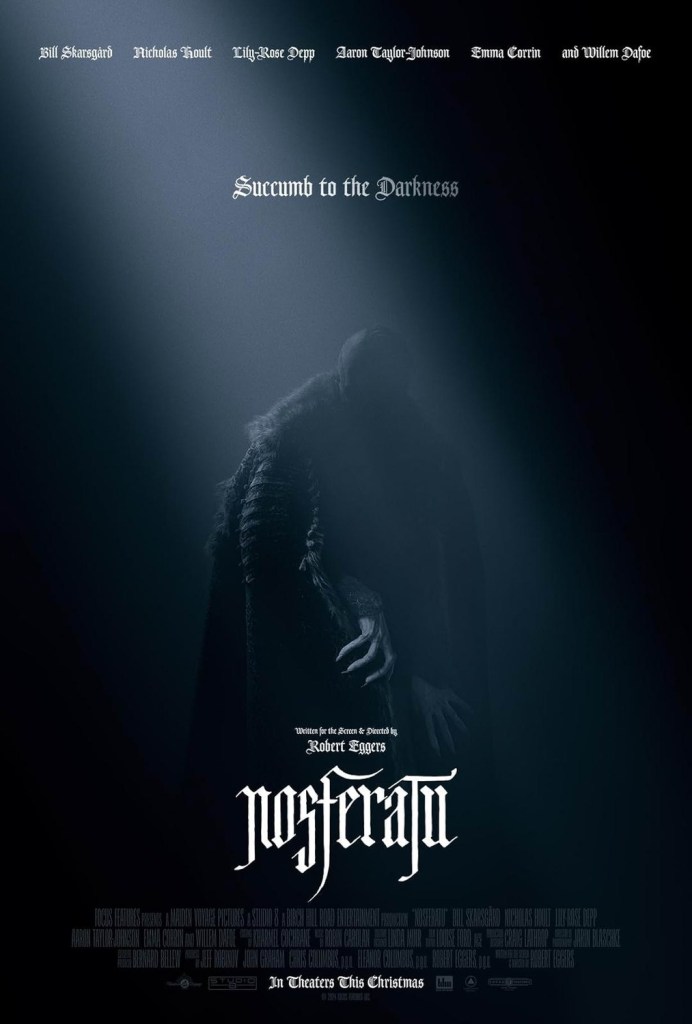
Ever since The VVitch launched its remorseless, dread-powered assault upon our psyches back in 2015, there hasn’t quite been another filmmaker like Robert Eggers. Relentlessly dedicated to replicating the harsh periods in which his brutal films are set, his other films, The Lighthouse and The Northman, have given us uniquely harrowing experiences that feel as starkly realistic as they are brutally relevant in modern times.
Well, in a union forged in the most poetically dark of places, Eggers has been handed the reigns of the remake to Nosferatu: A Symphony Of Horror, the silent, unofficial adaption of Bram Stoker’s Dracula that not only stalked it’s own path, but created a visual language for cinematic fear that still exists today. Not only that, but in 1979, notorious eccentric Werner Herzog managed to remake it in a way that already meant that F.W. Murnau’s black and white classic had already been adapted for more modern sensibilities.
No pressure, Rob, but that’s a hell of a double act you have to follow…
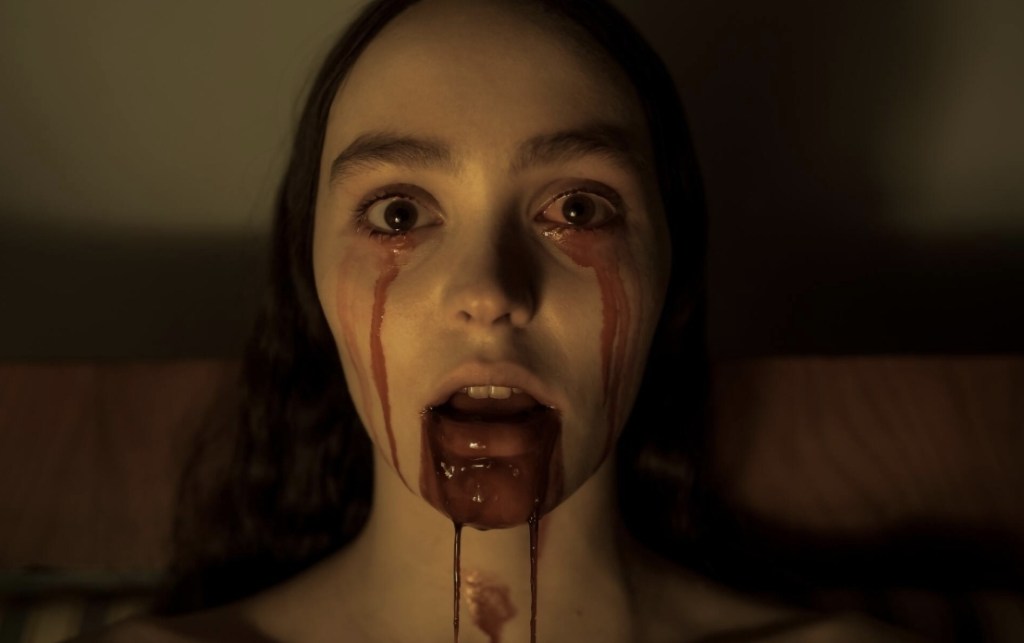
Years after a worrying, sexual encounter with a metaphysical, dark presence in her youth, Ellen Hutter found that her bouts of crippling depression and mental illness have subsided thanks to her marriage to Thomas as the two share a deep and mutual love that fulfills them both. However, not long after they are hitched, a very lucrative deal at the estate agents where Thomas works requires him to travel from Wisborg, Germany to the depths of the Carpathian mountains in Transylvania in order to secure a residence for the old and deeply eccentric Count Orlock. However, after a long and harrowing journey in which he’s plagued by nightmares and constantly warned by gypsies, Thomas soon finds out that “eccentric” is a horrific understatement.
You see, not only is Count Orlock an ancient, decrepit, leathery vampire, but it was he that Ellen cavorted with in her youth and he has every intention of making her acquaintance once again after spinning a conspiratorial web that’s already claimed Thomas’ boss. But after being trapped in the Count’s castle as he literally leeches off him by draining his blood, the hapless Hutter has to try and make his escape before he’s claimed completely.
Meanwhile, back on Germany, Ellen is ravaged by mortifying dreams and vicious fits and as it seems that her very sanity is slipping from her at an alarming rate so the desperate family doctor calls upon the aid of the Professor Albin Eberhart von Franz, a man who has dedicated his life and his career to the arcane.
However, as Orlock makes his journey to his new home by ship, his corrupting influence soon spreads to Wisborg in the form of a monsoon of plague-ridden rats that wreak further havoc on an already beleaguered town. Can this spreading evil possibly be stopped before it’s amorphous, choking shadow falls over Ellen once and for all?
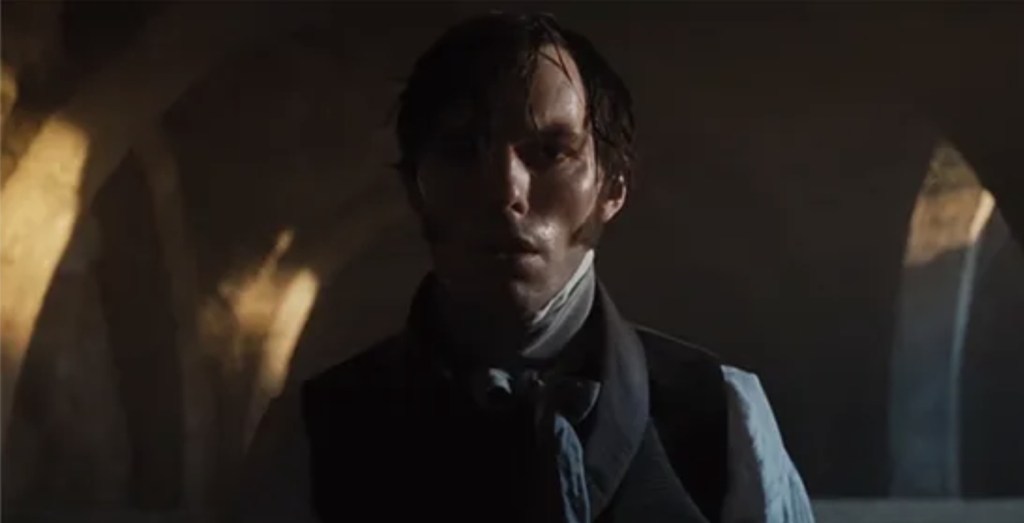
If Robert Eggers had a major obstacle to clear with his predictably lavish take on Murnau’s legendary template, it’s the haunting specter of over-familiarity that looms over everything that utterly unavoidable if you’ve ever experienced the Dracula/Nosferatu rodeo before. Sure, the original movie shifted the facts around due to a definitive “no” from the Stoker’s estate, but despite some changes in the names and a different ending, the vast majority of the tale is pretty similar. As a result, I personally found the first third of Nosferatu a little bit of a box checking exercise as it sticks pretty close to Murnau’s version of events and at times it feels a lot like Francis Ford Coppola’s swing at Bram Stoker’s Dracula if you wrung all the camp and comedy accents out of it.
However, once Eggers’ vision gets to fully exert its influence, it becomes a haunting, stark and decidedly adult tale that equates vampirism to less than malevolent seduction and more like the out and out violation of sexual assault. Not only does Lily-Rose Depp’s tormented Ellen suffer at the clawed hands at her abuser, but the ordeal of Nicholas Holt’s Thomas also carries the sting of someone being drugged and waking up to find that he’s been savagely taken advantage of. Such grim metaphors add a certain degree of modern bite to an oft-told tale, but in a year of memorable horror performances (Hello Nic Cage in Longlegs) it’s Bill Skarsgård’s Count Orlock that’ll stick in the memory the most.
Invoking, but never copying what has come before, the living pestilence of Orlock resembles some perverse amalgamation of a festering zombie, with the gnarled posture of a Skeksis from The Dark Crystal, while all wrapped up in what looks like Tom Selleck’s mustache and while Skarsgård delivers some of the best “R” rolling ever heard in cinema history as his deep rumble and wheezy breath make the cinema sound system work overtime. However, while most takes on the vampire mythos tend to skew towards the character with the fangs being some sort of tragic being, it’s refreshing that this take on Orlock is unrepentantly evil, souring and corrupting virtually everything that passes under his pestilent gaze. Some may find Skarsgård’s performance leaning too far into the arthouse after his absurdly iconic turn as Pennywise the Clown, but he positively radiates dread like stink off a corpse and it’s good to know that Eggers has lost his touch for creating the same, tangible, suffocating and utterly upsetting atmosphere he conjured up in The VVitch.
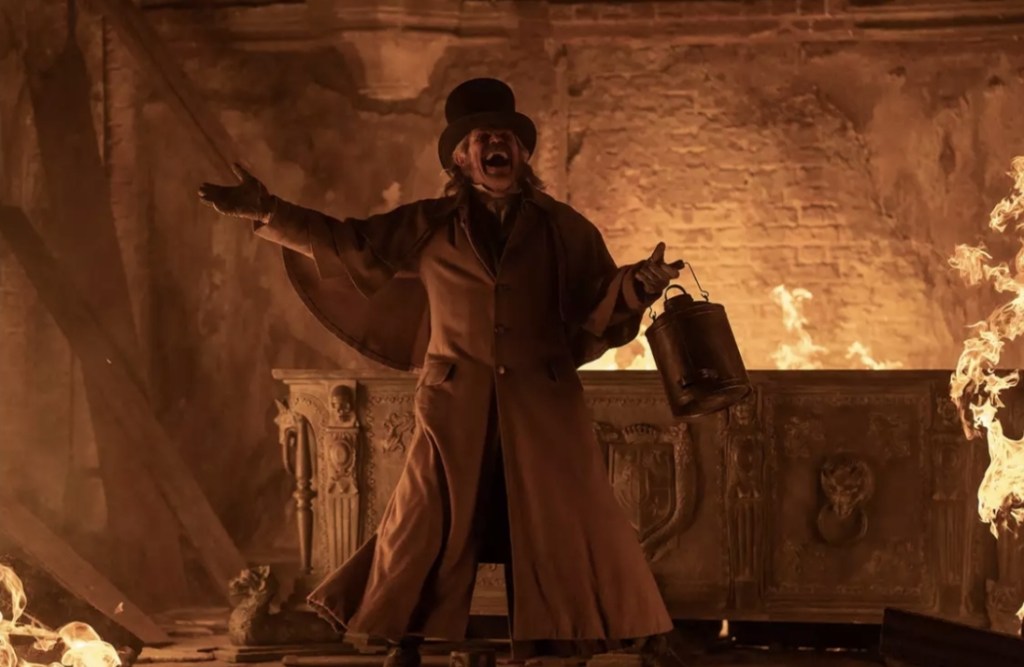
Strangely enough, while it contains plenty of dream-like imagery, an immaculately created period setting and more than one instance of emaciated vampire full frontal nudity, Nosferatu is Eggers most accessible movie by far and as always, I can’t wait to see what he unleashes upon us next. With any luck, he’ll be surrounded by a cast as good as this one as Depp challenges Nell Tiger Free from The First Omen to an Isabelle Adjani in Possession-off when it comes to harrowing convulsions, Holt looks genuinely horrified for 80% of the run time and Emma Corrin and Aaron Taylor-Johnson go full Merchant Ivory before their lives are shredded by being collateral damage in Orlock’s repellent lust. Better yet, Eggers regulars Ralph Ineson and Willem Dafoe (who amusingly played Orlock in the stunning mock biopic, Shadow Of The Vampire) get to strut their stuff as they try to get to the bottom of Ellen’s illogical malady, leading to the latter going into full meltdown as he attempts to burn down Orlock’s lair while screaming at the rafters.
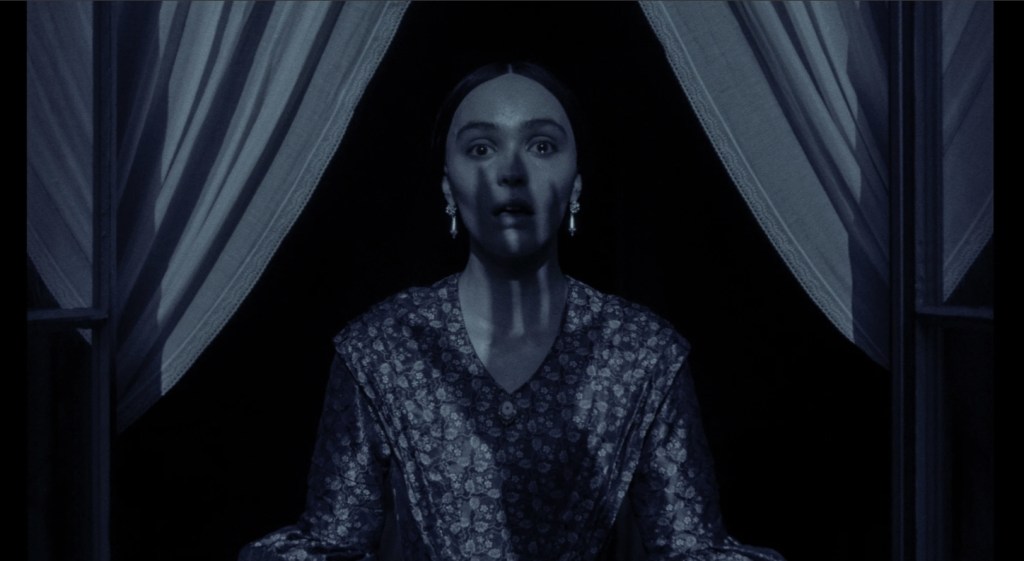
While Eggers dutifully nods toward those who came before (Murnau’s iconic shadow play, Herzog’s overzealous use of rats), he places his indelible stamp on an overfamiliar story with aplomb and even if the first third will be a bit too recognisable to seasoned fang-heads, the final third brings the unsettling pain the way that only Eggers can.
Orlock and load.
🌟🌟🌟🌟

 We Have Issues
One comment