
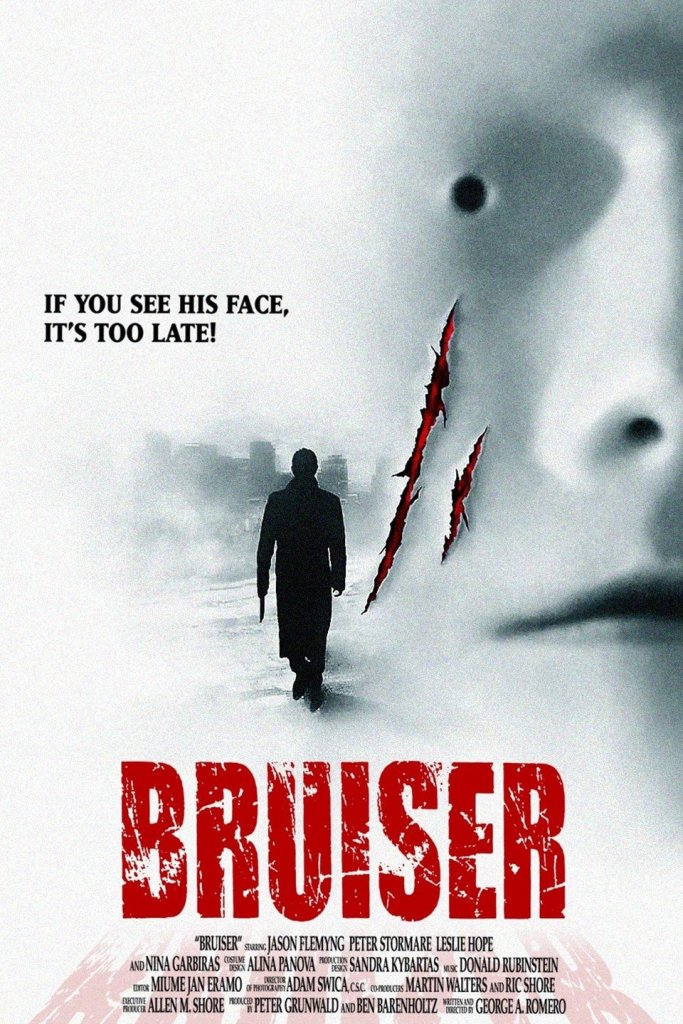
Despite a lot of casual horror fans being utterly unaware that it exists, Bruiser was something of a big deal when it made its bow in 2000. Whether you believe it or not is entirely up to you, but for those in the know, this curious little horror/thriller was the first film George A. Romero had directed since 1993s Stephen King adaptation, The Dark Half, having filled the intervening years with the odd music video, or a Japanese commercial for the Resident Evil 2 video game.
Fans of Romero were waiting with baited breath, but after Bruiser was released, lungs were expelled with a certain amount at confusion as the director’s comeback wasn’t quite what they were expecting. In fact, I don’t think Bruiser could have been predicted by anyone as it’s quite a strange beast, but those who had followed the auteur’s early work were already familiar with how weird big George could be when his wasn’t wrangling his beloved zombies.

Despite (or because of) working as a creative director of a successful magazine firm, Henry Creedlow finds himself decidedly unhappy with his flashy, but empty life. His pushy wife treats him with utter contempt, the renovations on his house seem never ending, the investments his best friend, Jimmy, is taking care of aren’t paying out as much as the should and he’s constantly getting steamrolled by his sleazy and wildly inappropriate boss Milo and as a result, it’s no surprise that Henry’s started fantasizing about either blowing his brains out or violently assaulting members of the public who are outwardly rude to him.
In fact, the only joy Henry seems to glean from his stressful, nothing, existence is the spark that exists between him and Milo’s put-upon photographer wife, Rosie and during a party at the weekend, while his wife and Milo are getting a little too familiar with one another, Rosie makes a plaster mold of his face to decorate and add to her collection. However, with his wife’s open infidelity too much to bare, Henry’s about to have an extreme reaction to his miserable existence that no one could possibly have seen coming.
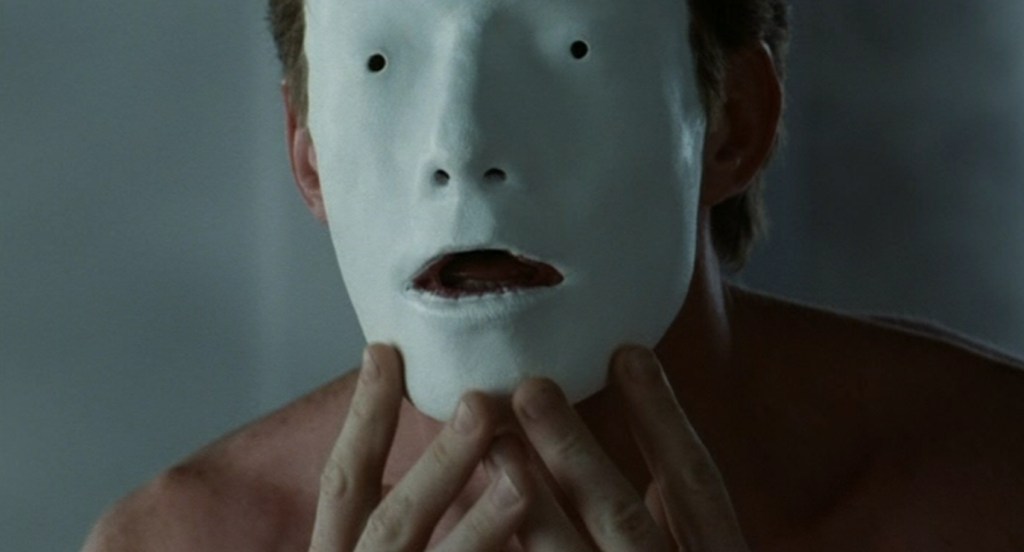
Waking up one morning, Henry find that his face has gone, only to be replaced with a white, featureless visage that resembles Rosie’s plaster mold mask in a condition that seems to be directly connected to the dehumanization he puts up with on a daily basis.
However, now unable to look himself in the face since his original features have gone bye-bye, Henry now finds that he’s severed from the previous, social constraints that previously kept him down and that the act of murdering his thieving maid comes horribly easily. Summising that he’ll get his face back if he rids the world of all the shit-heels who wronged him, Henry goes on a quest for vengence, but how long can a man with no face avoid the police?
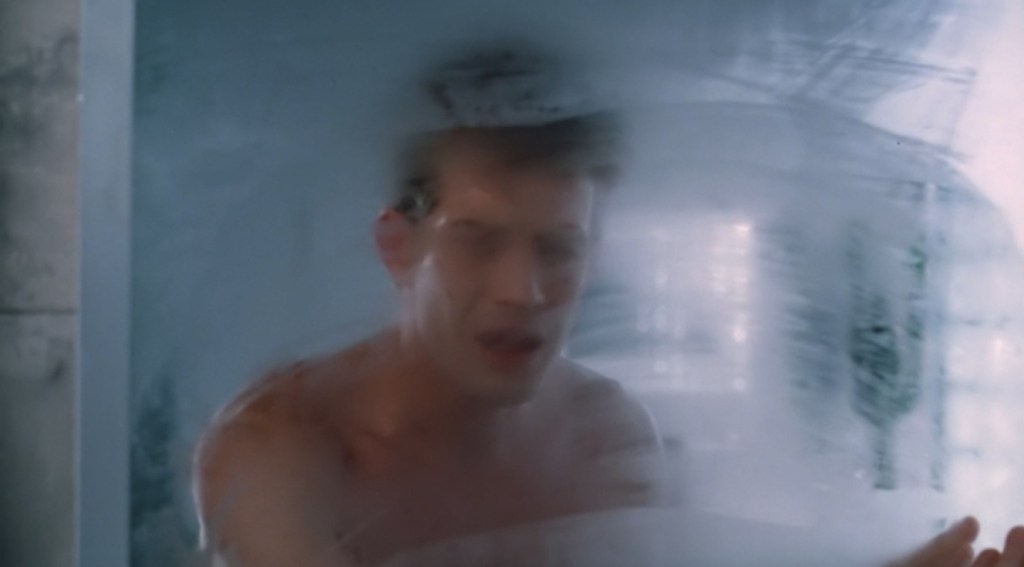
Despite some hefty themes about identity and happiness, some outlandish, playful humour and an odd streak a mile wide, Bruiser probably wasn’t what people were expecting from a Romero comeback, but if you take a closer look, at some of the out-there and avant-garde stuff the director made before the 80s, the strangeness of the film comes into much sharper focus. Whether examining questions about the self in regards to a bored housewife falling into witchcraft in Season Of The Witch or the titular traumatised teen of Martin who believes he’s a vampire, the existential crisis of Henry Creedlow’s extreme identity crisis slots right in.
However, what does stand out is the fact that Romero approaches Henry’s plight with a sense of satire so broad, it begins to approach the campiness of Creepshow and this is where Bruiser starts to get a little bruised. In the genre of white, successful males falling foul of aims and goals that strip them of their very identity, Romero’s entry falls far behind the likes of Fight Club or American Psycho when it comes to suggesting that the Anerican dream is rotten as moldy fruit and its erratic tone proves to be more of a hindrance than a tool to drive this home.
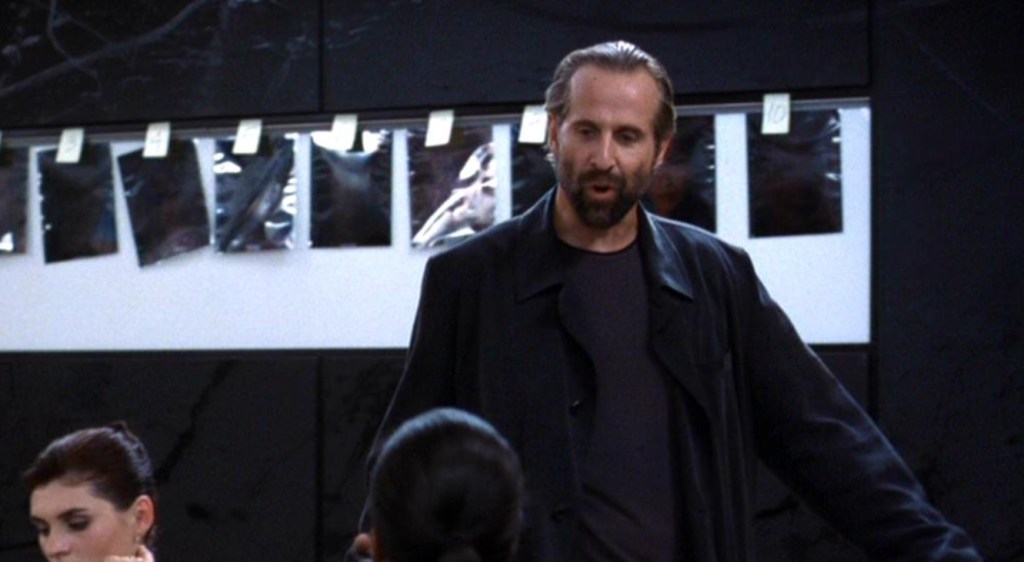
Maybe Romero figured that to properly create a world in which no one really bats an eye at a man with a bone white face, the director exaggerates everything, almost if he were directing some obnoxious art installation, which only succeeds in being fairly annoying – but weirder yet is the fact that none of the performances seem to match. Jason Flemyng’s lead is far too whiny to build up the proper empathy needed for you to feel either empowered or horrified by his swing into vengeful killer, while any subtlety that Leslie Hope manages to stir up as Rose is promptly obliterated by the wild overacting of Peter Stormare as the grotesquely inappropriate Milo, who’s ranting and endless crotch grabbing is far too manical to be taken even remotely seriously. Even the reliable Tom Atkins as a dogged detective has seemingly been directed to act like he’s in some sort of exaggerated noir in an attempt to add to the garbled noise of the piece.
Even the score seems genuinely unsure which way to go and switches, mid film, from a meandering jazz riff, to a full blown extended cameo from legendary band, The Misfits, whose songs play out constantly from the climatic party in the final reel.
Some of it works. The design of Henry’s non-face is actually pretty effective considering the overall concept of a man missing his face is so tough to grasp visually, and the decision to go with an unpainted plaster mask look – complete with creepy little eyeholes – is actually pretty inspired. Similarly, Romero knows he way around a kill sequence with his eyes closed and the fact that this whole slice of body/mind horror was filmed in Toronto (instead of Romero’s beloved Pittsburgh) almost gives it an absurdist, Cronenberg feel.
Alas, those who firmly feel that Romeo’s best efforts lay in his shambling zombie would have to wait another five years for the director to get back in the chair for Land Of The Dead, but even though Bruiser sees Romero hardly on top form, for hardcore fans, it’s an esoteric return to his more wildly experimental days. The less forgiving, however, will suggest the movie suffers ironically by not knowing what it truly wants to be.
🌟🌟
 We Have Issues
Totally disagree. This is an excellent film.
LikeLike