
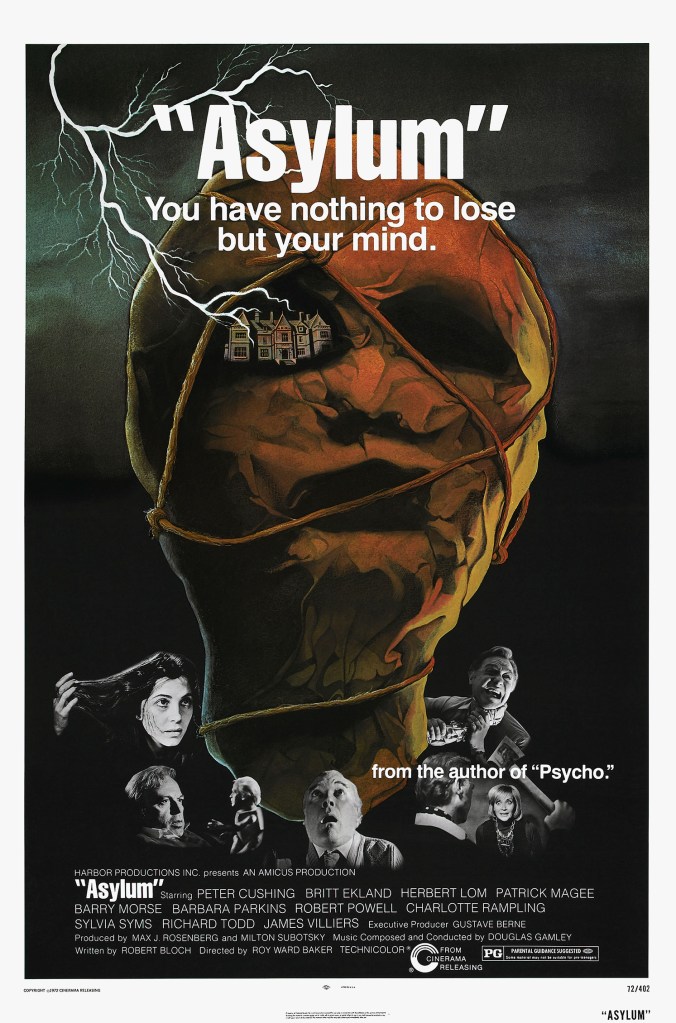
Almost imperceptibly, the landscape of horror was changing. With the 60s now comfortably in the review mirror, a cadre of hungry directors are now poised to change the face of cinema as we know it with such titans as Dario Argento, George A. Romero and Mario Bava already having a noticable impact and others, including David Cronenberg, Wes Craven and John Carpenter, eagerly waiting in the wings. As a result, Hammer Film’s steady output of period-set Dracula, Frankenstein and Mummy sequels were gradually starting to look decidedly out of date – however, sitting somewhere inbetween was Amicus Productions, a studio that had found success with a series of anthology films that boasted a “modern” setting, but still invoked the classic nature of British horror movies past. Better yet, the studio had managed to get their portmanteau movies to really hit their stride in 1972, with the superlative Tales From The Crypt finding a perfect balance between cool campiness and creeps; but after this opening salvo, Amicus then invited us to visit – the Asylum.
The young, hopeful, Dr. Martin arrives at a remote asylum for the “incurably insane” in the hope of passing a job interview in order to work there, but upon arriving, things already prove to not be all that they seem. For a start, he’s greeted by authoritarian warden, Lionel Rutherford, who not only has been recently confined to a wheelchair, but who informs Martin that the former head of the asylum, Dr B. Starr, has gone utterly insane and has been locked up in the very establishment he once ran.
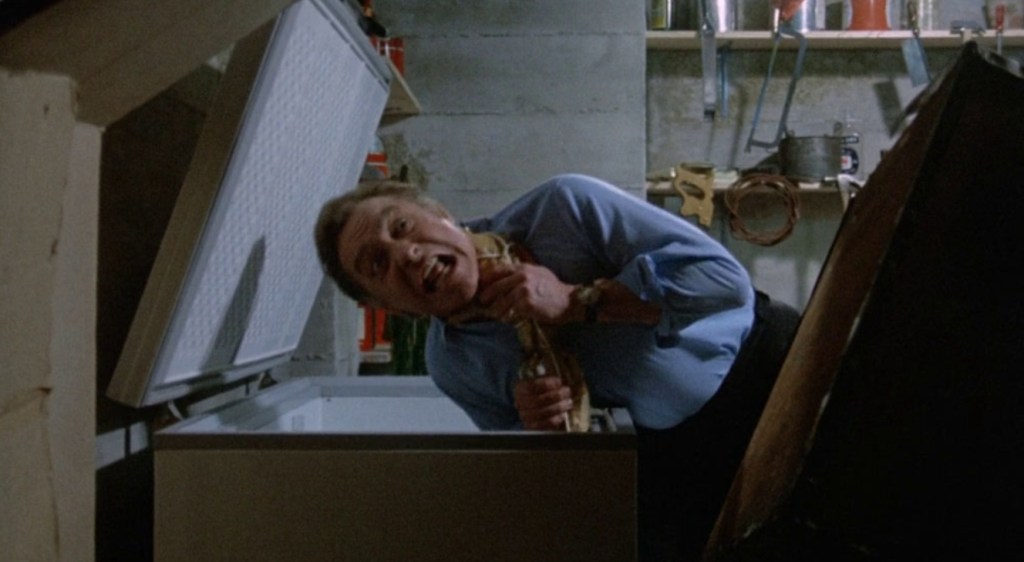
Intrigued by Martin’s idealistic hopes for patient reform (“incurably insane”, remember?), Rutherford sets the young doctor an unorthodox task: to interview all the patients in the cells upstairs and if he can guess which one is the utterly delusional Starr, he gets the job and Martin, eager for the challenge accepts. However, upon meeting with four patients who seemingly have no grasp on reality whatsoever, he’s exposed to a series of incredible stories, each more fantastical and macabre than the last. First to get his attention is “Bonnie”, a woman who has plotted with her lover, Walter, to murder his rich wife, Ruth, who just happens to be an aficionado of voodoo. But after Walter kills his spouse, chops up her body and wraps all the pieces in brown paper and string, both Barbara and her murderous beau find that some victims won’t stay dead.
After mulling this over, Martin next moves on to “Bruno”, a nervous, struggling, former tailor who lost his mind after being asked to create a special suit by supernatural means for the mysterious Mr Smith; and after him, he visits the ex-addict “Barbara”, whose grasp of reality all but dissipates once her friend Lucy comes to visit. However, it’s the final patient, Dr Byron, who catches Martin’s eye the most as his claims of being able to put his consciousness into the little robot dolls he makes seems the most outlandish of all. But which one of these deranged souls will turn out to be Dr. Starr?
While I must confess that Tales Of The Crypt is my favorite of the Amicus anthologies chiefly down to my familiarity with both the original EC Comics and the later HBO series, Asylum manages to equal it for shocks, weirdness and a sense of the unhinged that really comes to the fore in the utterly batshit climax. Much like some of the former anthologies, all the stories are based from the works of Psycho author Robert Bloch, but rather have him adapt them, this time they’ve all been rewritten for the screen by Amicus co-founder Milton Subotsky, who gives each tale a nice zip to them and now were in the realms of 1972, the movie is free to up the freakish imagery which no doubt traumatised the absolute fuck out if any impressionable youths who managed to catch a viewing.
In fact, it’s those daring moments, that balance on the tightrope between horrifying and utterly ridiculous, that proves to be among Asylum’s greatest successes with the opening story “Frozen Fear” in particular showcasing a grotesque flair when all the disembodied parts of a murdered woman’s body start edging toward their intended victim to score a belated revenge. While watching a severed torso all wrapped up in packing paper, somehow edging across the floor at an easily avoidable speed may sound pretty silly (and it is) it also proves to be intensely creepy too – as is the glowing coat from The Weird Tailor that inadvertently brings a tailor’s dummy to life that also veers between laughable and freakish.

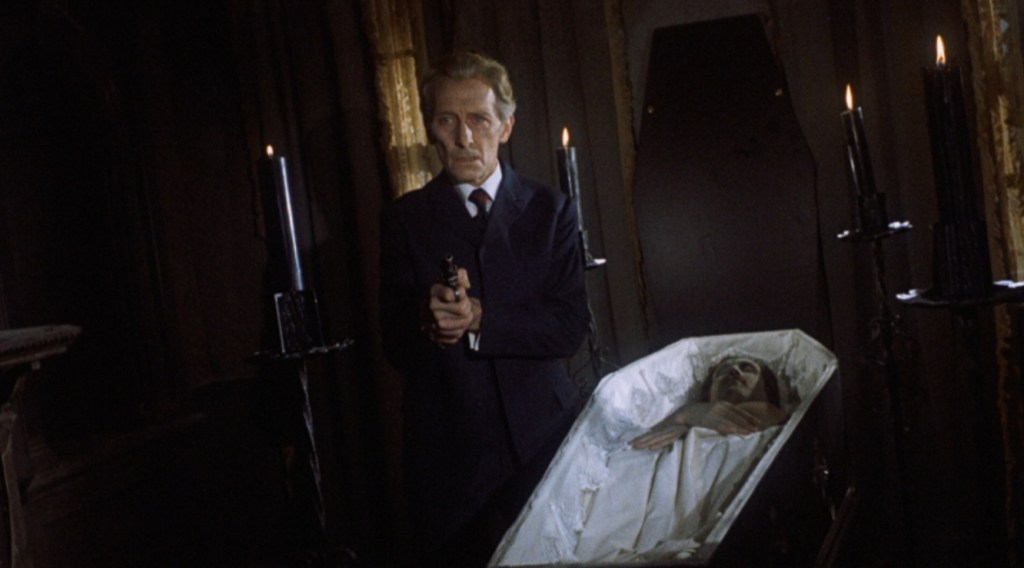
However, the other major selling point of Asylum is that it probably has one of the best casts for a portmanteau movie that Amicus ever complied and among the legion of familiar faces on parade her is the likes of Peter Cushing (obviously), Patrick Magee, Robert Powell, Charlotte Rampling, Britt Ekland and Herbert Lom who all get chances to strut their stuff in various ways. In fact, the double act between Rampling’s troubled Barbara and Ekland’s more carefree and conniving friend proves to be strong enough to carry it’s own movie and even though Lom doesn’t get to do much more than just stare intensely until his little doll version of himself goes on a murderous walkabout, no one glares quite like Hebert Lom.
While all these aspects merge to create a genuinely unpredictable experience, director Roy Ward Baker (a long time veteran of Hammer productions) knows that you need a big finish and provides an ending that not only merges the wraparound story with the individual ones in a way not seen before (the “guess the patient” plot is fucking inspired as it is shockingly unprofessional), the the finale ends up being a masterclass in hokey, out of controlled lunacy that merges Lom’s desire to sic his little robot-him on the asylum’s faculty with the overarching mystery that leads to a final, brutal twist. Maybe modern viewers would write of a tiny killer robot being squashed to reveal little, sized-to-scale internal organs as simply stupid beyond belief, but Ward Baker knows that when it co.es to wrapping up a horror anthology, you’d better go weird or go to Hell; otherwise what’s the point of being there at all? Adding to the chaos is the film using Night On Bald Mountain predominantly on the score (you know the one, it’s the piece Fantasia used when those messed up, Disney demons arrived) which fits the insanity perfectly and sets the tone even better.
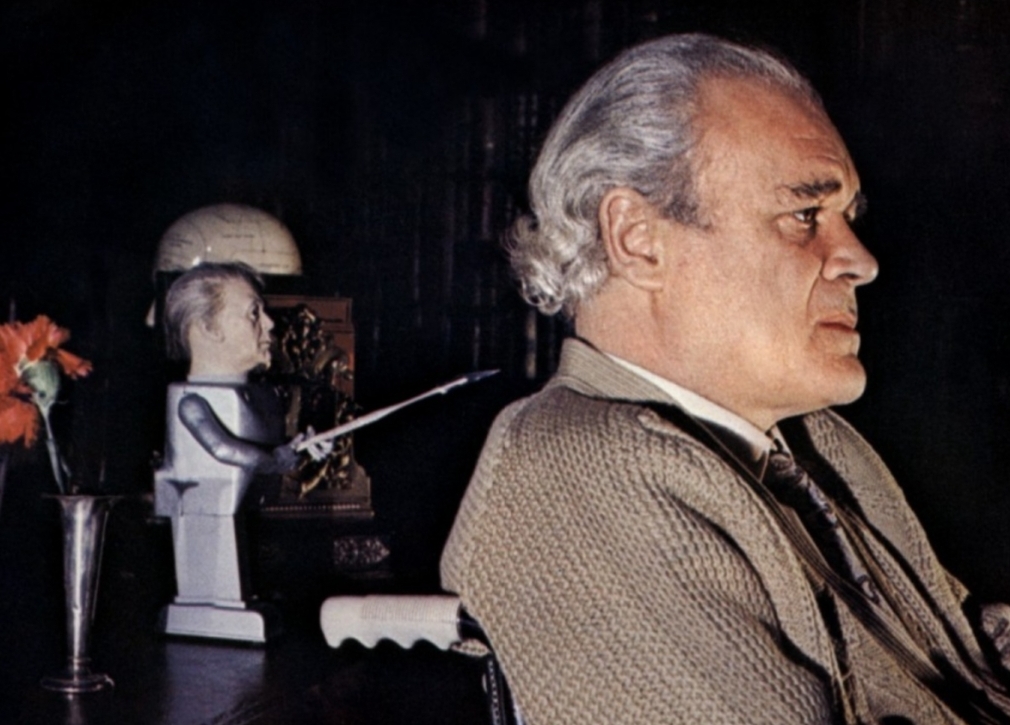
As silly as it is unnerving, as campy as it is brutal and as fun as you’d expect for a film that has Patrick Magee stabbed in the spinal column by what looks like a tiny, Herbet Lom-faced wind up toy (they missed a trick by not merchandising those little fuckers, let me tell you), you don’t have to be crazy to enjoy Asylum – but it helps…
🌟🌟🌟🌟

 We Have Issues
A beloved memory. Watching this on video one Winter day with my Mom. We had an ice storm, and the ice covered trees were visible from the window. Perfect viewing.
LikeLike