
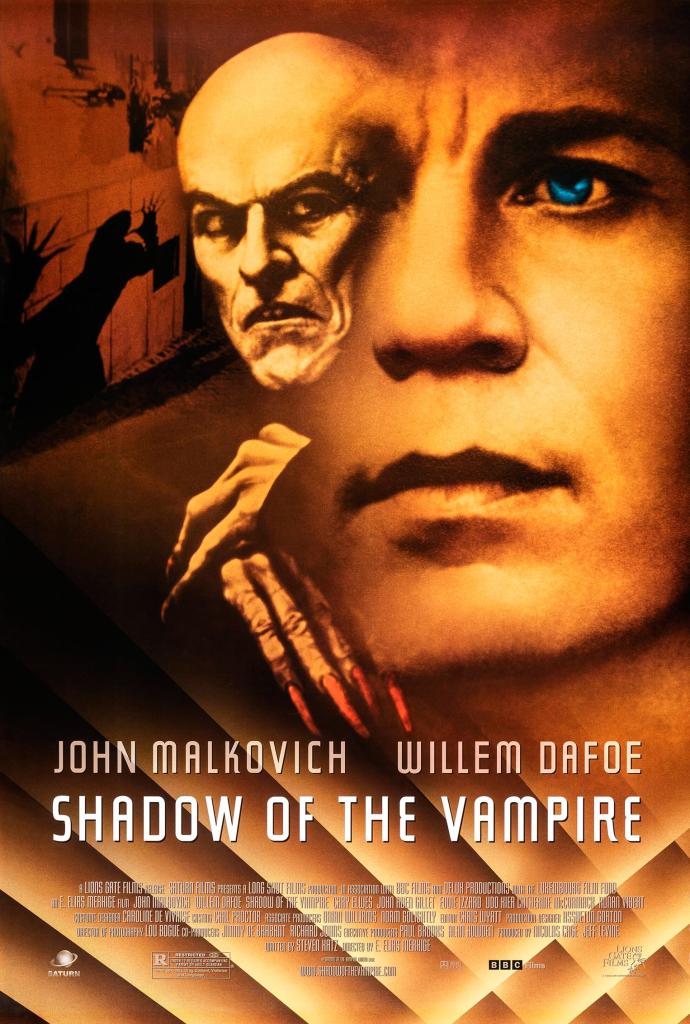
One of the most important vampire films – nay, horror films – ever made is F.W. Murnau’s silent classic, Nosferatu: A Symphony Of Horror. Scuttling out of Germany in 1922, it essentially set the bar for every single film that came after it in relation to creating a visual language to translate fear, horror and general creepiness onto the silver screen in ever more evocative ways. Despite being an unofficial telling of Bram Stoker’s Dracula, it’s legacy resonates to this day as many legends swirl around the making of such a film and the actor who portrayed the stunning striking antagonist, Max Schreck about whether his unforgettable performance meant he actually was one of the undead.
Well, in 2000, an independent film with a dynamite cast embarked on a movie that chose to have a little fun with that absurd concept and made Shadow Of The Vampire, a movie that decided to take that legend and run with it as far as it could. Part meta comedy, part indie drama and part love letter to the time of silent film, it proved to be quite unlike anything else of its time and also managed possibly one of the greatest casting coups of the decade. Willem Dafoe as a vampire? Sign me the fuck up!
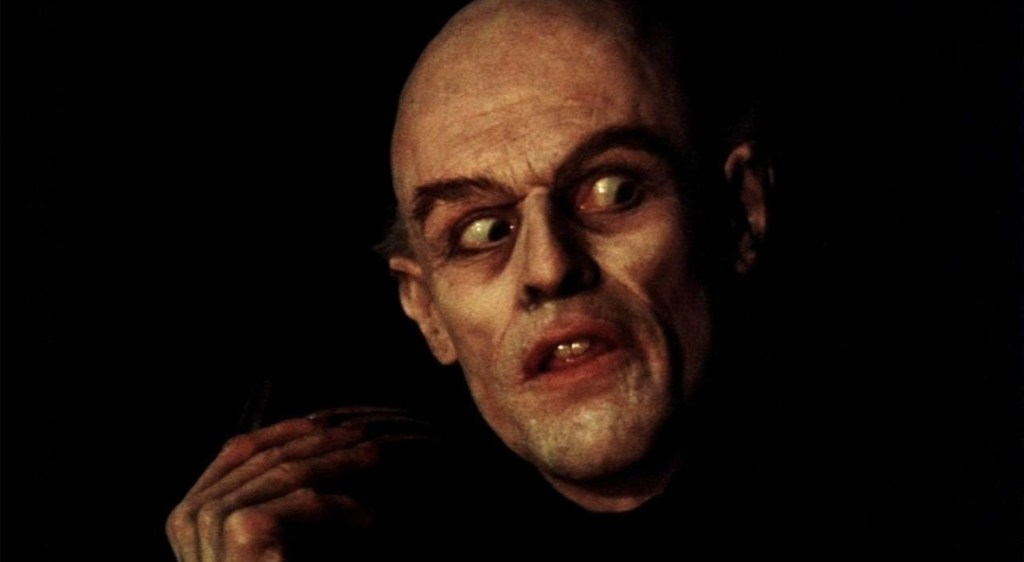
The atmosphere is tense on the set of F.M. Murnau’s troubled, unauthorised, production of Dracula, titled Nosferatu, as tempers flare at the director’s rather unorthodox methods. While producer Alben Grau, screenwriter Henrik Galeen and camera operator Wolfgang Muller are flummoxed by being kept in the dark by the maverick filmmaker, actor Gustav von Wangenheim fills them in on Murnau’s rather audacious plan. It seems that in the role of the vampire, Count Orlock, he has cast a character actor by the name of Max Schreck, but this performer employs such a extreme use of method, he will only interact with the crew in makeup and never break character once they meet him in Czechoslavakia.
Once in Czechoslavakia, however, the crew start to experience strange things once the strikingly grotesque actor is on the scene. Wolfgang is suddenly stricken with a mystery sickness that seems very much like blood loss and other, lesser crew members disappearing without trace and unbeknownst to everyone, Mernau has actually scored a very dangerous coup on order to make his movie achieve a very particular type of realism.
You see, Max actually is a vampire who Murnau has managed to enlist with the agreement that he is allowed to actually feed of lead actress Greta Schröder during the last scene, but as filming progresses (with new cameraman Fritz Arno Wagner literally flown in to cover) Schreck becomes more and more belligerent and difficult to control. With a leading antagonist who is literally feeding off of the crew and an obsessed director that seemingly is utterly disinterested in morals until his masterpiece is completed, things grow evermore fraught. But once the final scene finally arrives, numerous double crosses are planned in order to get everyone what they want; but who will emerge victorious and what will it cost?
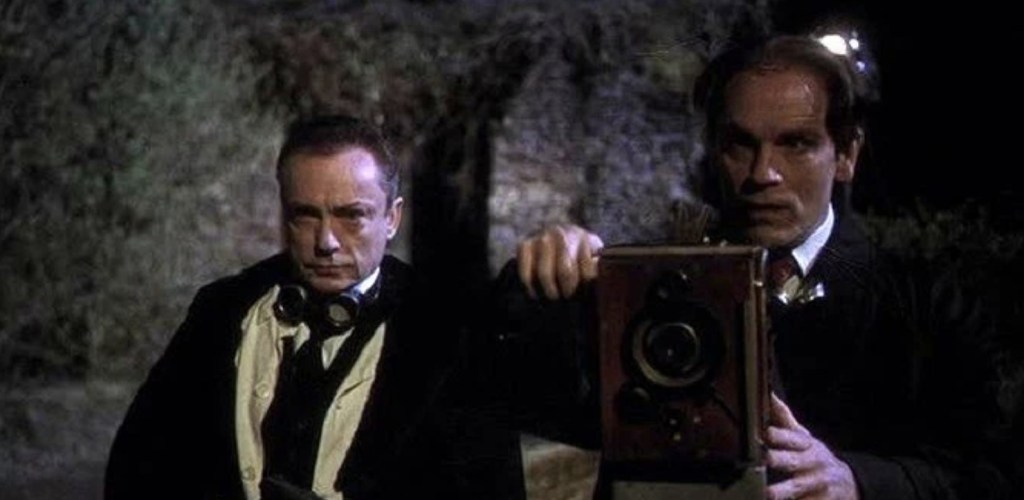
Right from the off, the ramifications of making a movie about making a movie where the man pretending to be a vampire is actually a vampire are so perfect it actually scrambles the mind. After all, what is filmmaking but an attempt at crystalising immortality, telling stories in a medium that keeps the characters within frozen in time, ever young and fee to do whatever they wish with impunity. Taken like that, there are many ways it can overlap with the concept of vampirism and when you add themes such as obsession and duplicity, it starts to seem into the world of film making too. Take such notoriously heavy handed auteurs such as Alfred Hitchcock, Stanley Kubrick and, yes, Murnau who became renowned for putting their perfectionist leanings far ahead of such trifling matters as the mental and physical welfare of their cast crew if the perfect take is still just out of reach.
In essence, that’s exactly what E. Elias Merhige us trying to achieve while simultaneously expressing a deeply twisted love letter to the bygone era of silent filmmaking. This is a time them filmmakers where also technically seen as scientists and the crew even address the director as “Herr Doctor” and everyone wears lab coats as they work out shots, angles and lighting. However the film also juxtapositions cutting edge (for 1922, at least) filmmaking sciences with a sense of dark wonder from a less enlightened time as the gnarled, mottled figure of Max Schreck emerges from the shadows to get his five minutes of fame. The result may be a little downplayed, but is astonishing all the same and the film takes aim at multiple targets and manages to hit mostly all of them by being genuinely creepy (Schreck’s first appearance as he melts out of the gloom), amusingly sardonic about the filmmaking process (both Murnau and Schreck bicker about whether the writer is expendable or not) and, at times, remarkably brutal (the female Schröder is ostensibly an onscreen sacrifice in a snuff movie). However, while Shadow Of The Vampire goes through its many incarnations, both the director, the resplendent concept and the amazing cast manage to keep it firmly on track like some bizarre meta fusion of Living In Oblivion and Interview With The Vampire.
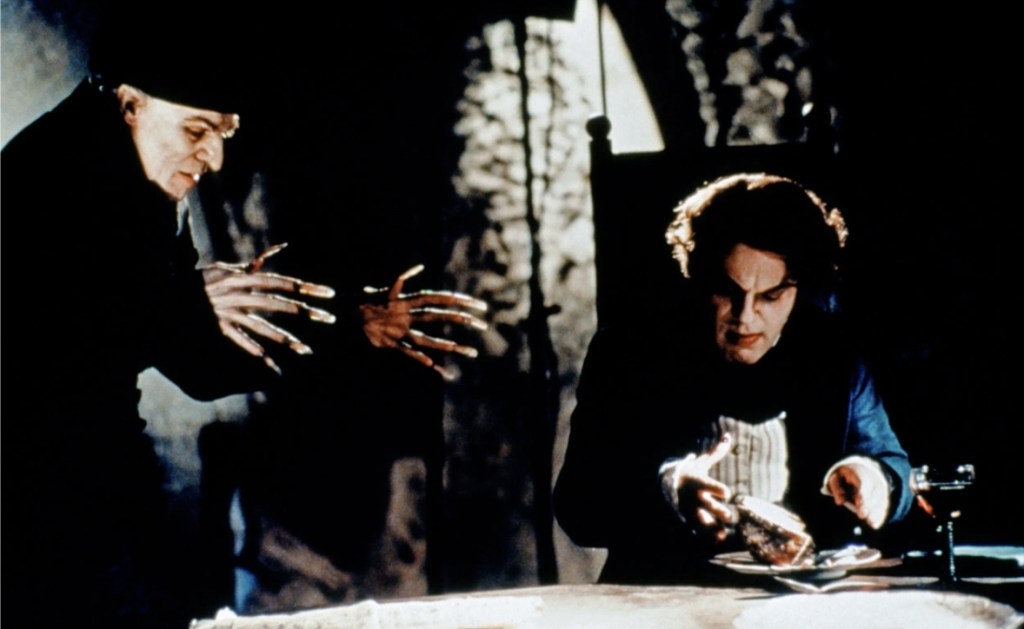
The MVPs here are undoubtedly both John Malkovich and Willem Dafoe (who nabbed an Oscar nod for his troubles), but the rest of the cast, that includes Udo Kier, Cary Elwes, Catherine McCormack and Eddie Izzard (who brilliantly recreates the more exagerated acting of the silent era almost perfectly) also desreve their flowers too. However, if Malkovich is brilliantly cast as the wunderkind, laudanum addicted director who goes to reprehensible lengths to create immortal art, Dafoe’s casting as Schreck may be one of the great, all time bangers. Similarly comedic, tragic and legitimate unnerving, he combines the physicality of the original Schreck (with the added habit of clicking his elongated fingernails like a chittering bug or snorting like some grotesque rodent creature), with the loneliness and social unawareness that Klaus Kinski brought to Werner Herzog’s remake. Lamenting a past glory lost to time and half remembered, Dafoe’s Schreck may be an utterly pathetic creature, but he’s something of a massive prick too, killing at random and making and breaking deals at will like a petulant toddler. Simply put, he’s fascinating and is arguably even a more intriguing beast than the actual Nosferatu that he’s supposed to be portraying, but Dafoe takes care not to make him a complete monster, even when he’s biting off the head of a bat like a bald, pallid Ozzy Osborne and moments were he cant help but stare transfixed of grainy, b-roll footage of the sunrise adds moments of pathos to this pathetic creature.
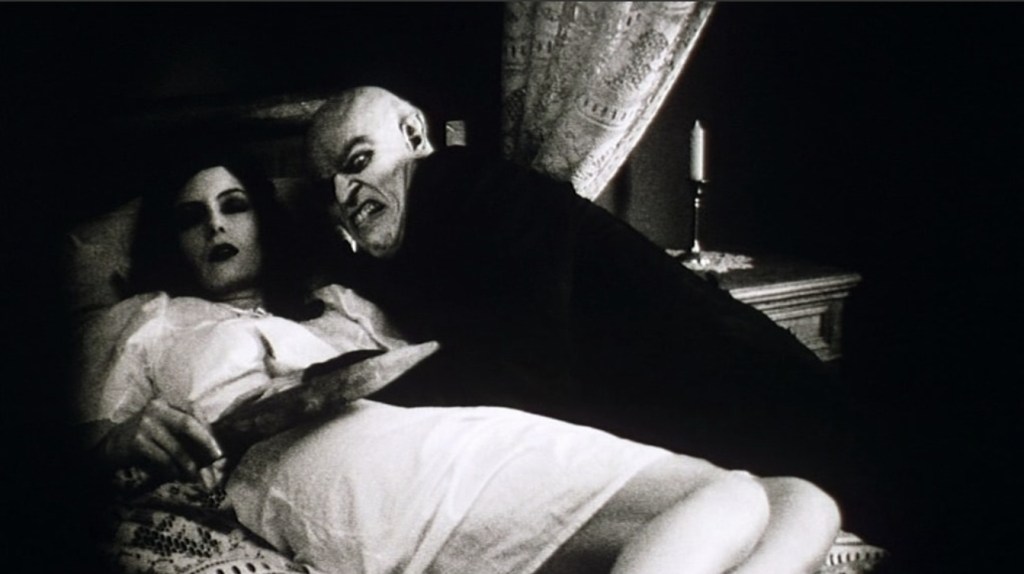
To round off the film’s genius, the movie also takes the care to recreate some of the most famous shots in horror film history as the diminished crew comes to film them, be it his discovery in the hold of a ship or the iconic ending of the film that’s “revealed” to have actually been made up on the fly when Murnau’s original plan fails horribly.
A true original, Shadow Of The Vampire may be lacking some of the bells a whistles of a more lively horror film, but as a talky and witty deconstruction of a undeniable classic, it manages to bear its teeth in other, smarter ways.
🌟🌟🌟🌟

 We Have Issues